A refrigerator clean-out dinner with built-in leftovers
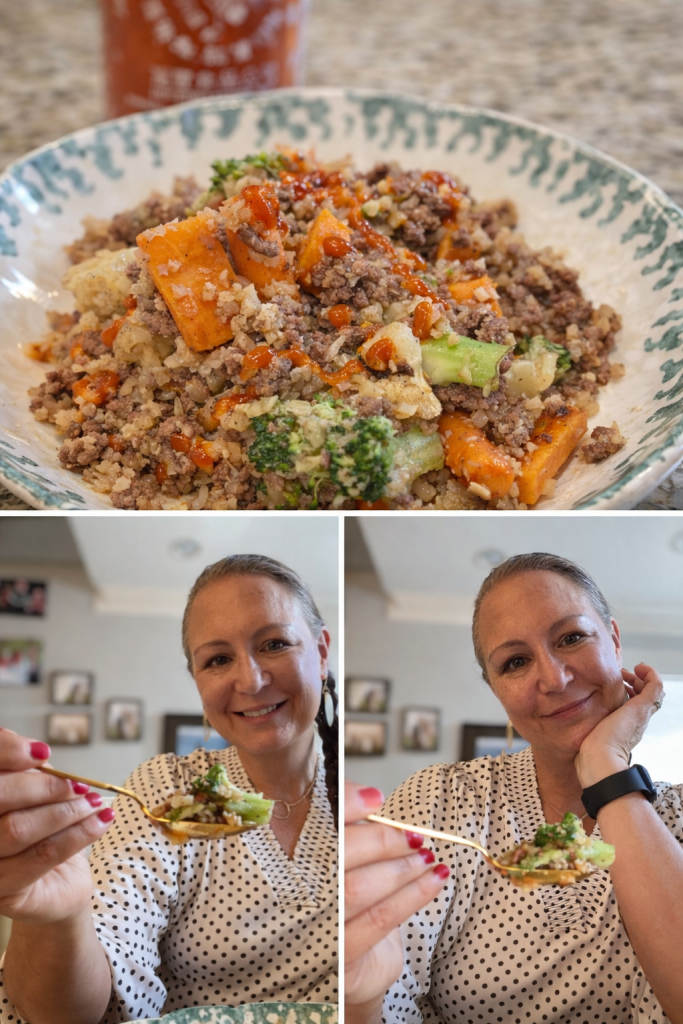
This was a refrigerator clean-out kind of day — the quiet after the holidays, when the decorations come down, the fridge looks a little tired, and I’m deciding what’s worth saving and what’s ready to be used up. I’m often torn between creating something entirely new and pulling from the rhythms of meals I’ve made before. Lately, I’ve found comfort in letting both instincts coexist.
My friends know I love leftovers, and this definitely made more than enough. As I get older, I think more intentionally about nourishment — especially protein — not as a rule, but as a way of taking care. This simple skillet came together from what I had on hand, made for easy meals over the next few days, and reminded me that sometimes the best meals are the ones that meet you exactly where you are.
Ingredients
1.5 lbs lean ground beef (90–93%)
1 large sweet potato, peeled and diced (about 2 cups)
1 large bag fresh or frozen mixed vegetables (broccoli, cauliflower, carrots)
3 cups cauliflower rice (fresh or frozen)
3–4 cloves garlic, minced
1½ tsp chili powder
1 tsp granulated garlic
½–1 tsp salt, to taste
½ tsp black pepper
Splash of Soy Sauce to taste
Optional: crushed red pepper for extra heat
Sriracha, for finishing
Optional: splash of broth or water if needed
Instructions
Heat a large skillet over medium-high heat. Add the ground beef and cook until browned, breaking it up well. Season lightly with salt and pepper.
Add the diced sweet potato and garlic. Cook for 4–5 minutes, stirring occasionally, until the potatoes begin to soften.
Sprinkle in the chili powder and granulated garlic. Stir well to coat everything evenly.
Add the fresh or frozen vegetables and cauliflower rice. Stir to combine. If the pan looks dry, add a small splash of water or broth.
Cover and cook for 8–10 minutes, stirring once or twice, until vegetables are tender.
Remove the lid and cook an additional 2–3 minutes to allow excess moisture to evaporate.
Taste and adjust seasoning. Finish with soy sauce and sriracha to taste.
Serving Ideas
Enjoy as-is for a high-protein, veggie-packed bowl
Serve over greens for a warm salad
Spoon into lettuce cups
Top with Greek yogurt or sour cream if desired
Nutrition Information (Estimated)
Per serving (based on 5 servings):
Calories: ~410
Protein: ~36 g
Fat: ~18 g
Carbohydrates: ~22 g
Fiber: ~6 g
Nutrition will vary depending on ingredient swaps and portion sizes.
This is the kind of cooking that doesn’t ask much of you. No strict plan, no perfect timing — just paying attention to what you have and what you need. Make it once, enjoy it more than once, and let it shift as your kitchen does.
From my kitchen to yours, with room to wander. Happy creating.❤️
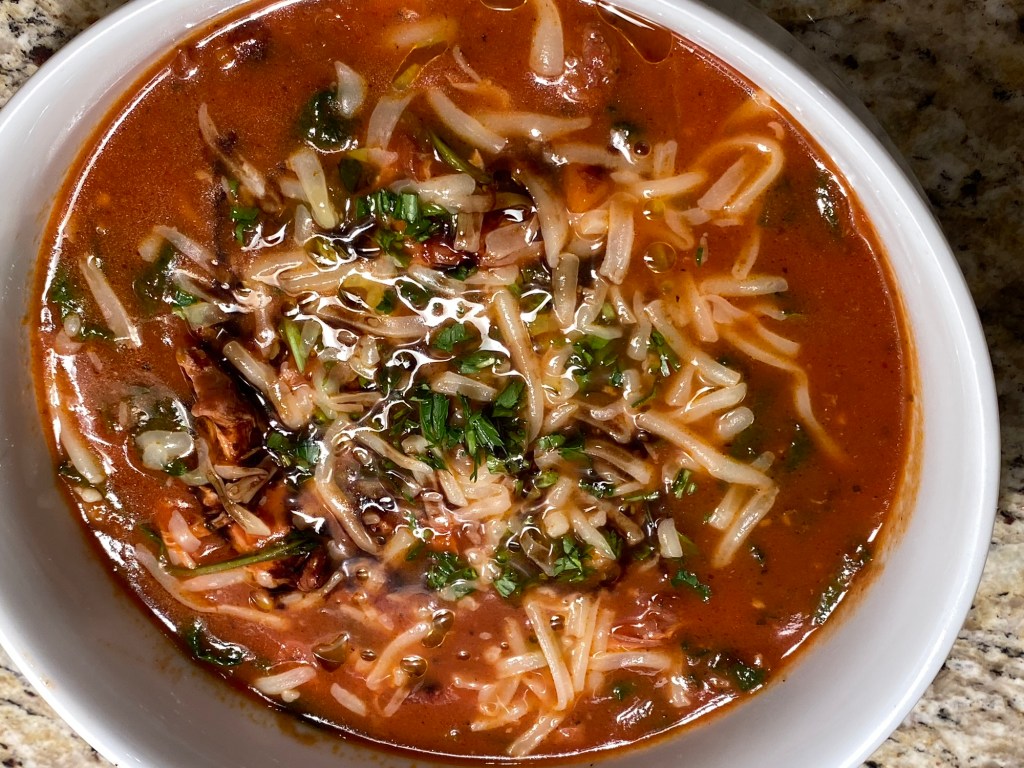
A winter stew inspired by Gma Nola’s Santa Fe kitchen, adapted with Italian flavors and what I had on hand.
⸻
This recipe comes from the kitchen of my grandmother, Nola, who cooked from recipes and trusted them — especially during snowy Santa Fe winters, when she’d make a warming pot of chili or stew after we came home tired and hungry from a day of skiing. Her version was spicy and chile-based, steady and reliable, the kind of food you could count on.
This one is different. I tend to cook by feel, following cravings and what’s on hand, and yesterday I was leaning toward Italian flavors. Consider this my variation on her winter stew — rooted in her kitchen, but allowed to wander. I hope you use it the same way and share how it changes when you make it yours!
Below is the version I made — written down so it doesn’t disappear.
⸻
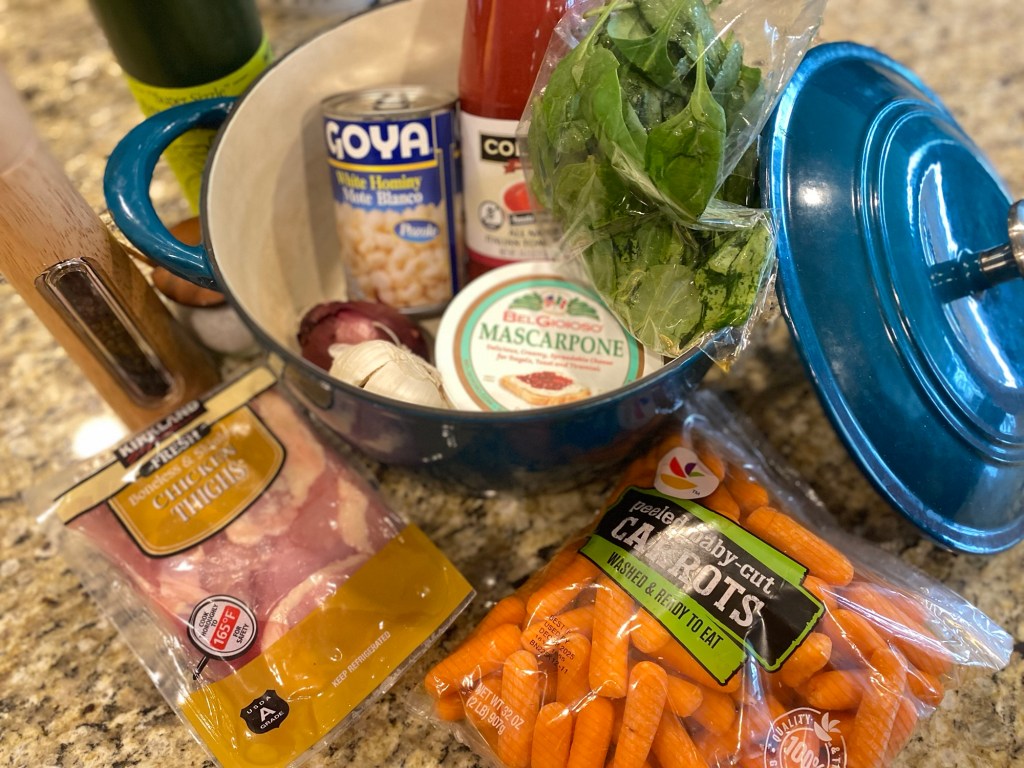
Ingredients
Protein
• 4 boneless, skinless chicken thighs
Seasoning
• Salt and black pepper, to taste
• Greek Freak seasoning (or any Mediterranean-style herb blend)
Aromatics & Vegetables
• 1 small red onion, diced
• 1 cup baby carrots, halved
• 3–4 cloves garlic, smashed or minced
Pantry
• 1 can (15 oz) hominy, drained and rinsed
• 1 can (14–15 oz) tomato purée
• 1 tablespoon double-concentrated tomato paste
• ½ cup red wine (any dry wine, for deglazing)
• 3–4 cups chicken broth or water (more as needed)
• Olive oil
Creamy Finish
• ¼–⅓ cup mascarpone cheese
Herbs
• 1 packed cup fresh basil leaves, torn
To Finish
• Fresh parsley, chopped
• Grated white cheddar
• Splash of balsamic vinegar
⸻
Instructions
1. Season & sear the chicken
Pat chicken thighs dry and season generously with salt, pepper, and Greek Freak seasoning.
Heat a heavy pot over medium-high heat with a drizzle of olive oil.
Sear thighs 3–4 minutes per side until deeply golden. Remove and set aside.
2. Deglaze
Lower heat to medium. Add red wine and scrape up all the browned bits. Simmer 1–2 minutes until slightly reduced.
3. Build the base
Add onion and carrots and cook 5–6 minutes until softened.
Stir in garlic and tomato paste and cook 30–60 seconds until fragrant and slightly darkened.
4. Simmer
Add tomato purée, hominy, basil, and 3 cups broth. Return chicken and any juices to the pot.
Bring to a gentle simmer, partially covered, for 20–25 minutes, adding more broth as needed for a stew-like consistency.
5. Temper the mascarpone
In a small bowl, whisk mascarpone with ½ cup hot broth from the pot, adding slowly until smooth and loosened.
6. Finish
Lower heat and stir the tempered mascarpone into the stew until silky. Taste and adjust seasoning.
7. Serve
Ladle into bowls and finish with parsley, grated white cheddar, and a light splash of balsamic vinegar. A bit of rice is also a nice add!
⸻
Approximate Nutrition (per serving, 4 servings)
• Calories: ~460
• Protein: ~32 g
• Fat: ~23 g
• Carbohydrates: ~28 g
• Fiber: ~4 g
• Sugar: ~6 g
• Sodium: varies by broth, seasoning, and cheese
⸻
Cook’s Notes
• Tempering the mascarpone prevents curdling and keeps the broth silky.
• Hominy adds texture and body without breaking down.
• This stew thickens as it rests — leftovers are even better the next day.
⸻
From my kitchen to yours, with room to wander. Happy creating!
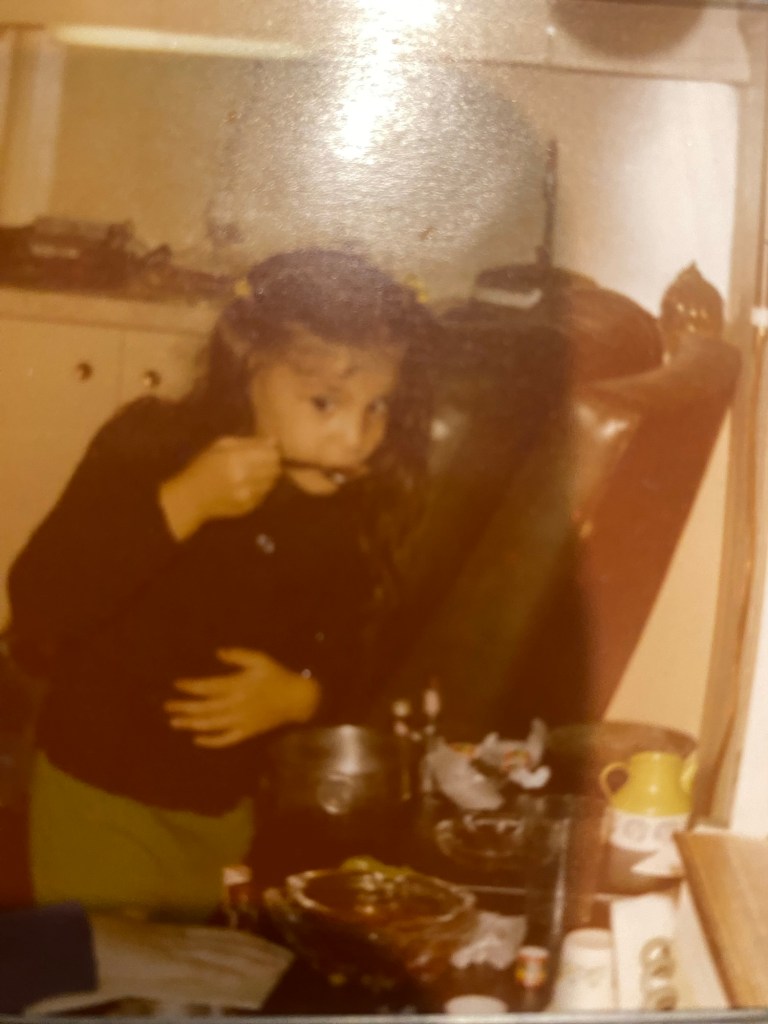
Before I understood food as flavor or craft, I understood it as place. The kitchens that shaped me were not show kitchens. They were working kitchens—rooms where the outside came in on muddy shoes and sun-warmed hands. Both of my grandmothers were gardeners, and their kitchens reflected that. Counters were places of transition, where something pulled from the earth became something shared, something sacred.
I didn’t think of it as learning at the time. I just liked being there.
Lifesaver Soup Anyone?!
The Wimberley Family Farm
As a child, we would visit my Grandma Helen’s family farm, where her brother still lived. The land felt endless to me then. I remember my Grand-Uncle Grant taking us into the massive farm garden and showing us how to pick corn—how to feel for readiness, how to twist and pull without damaging the stalk.
He taught us about the silk worms too—how they lived tucked inside the corn, and how to remove them before cooking. It wasn’t hidden or softened. It was simply part of the process. Food wasn’t sterile, and it wasn’t meant to be. Growth included discomfort, and understanding that didn’t diminish the experience—it deepened our appreciation for it.
We would drag our haul back to his porch, arms full, the corn still warm from the sun. That’s where he showed us how to make dolls from the husks and corn silk. The silk became hair. The husks folded into dresses. Even then, everything had another use.
Food, Music, and Rhythm
Around all of this was the food.
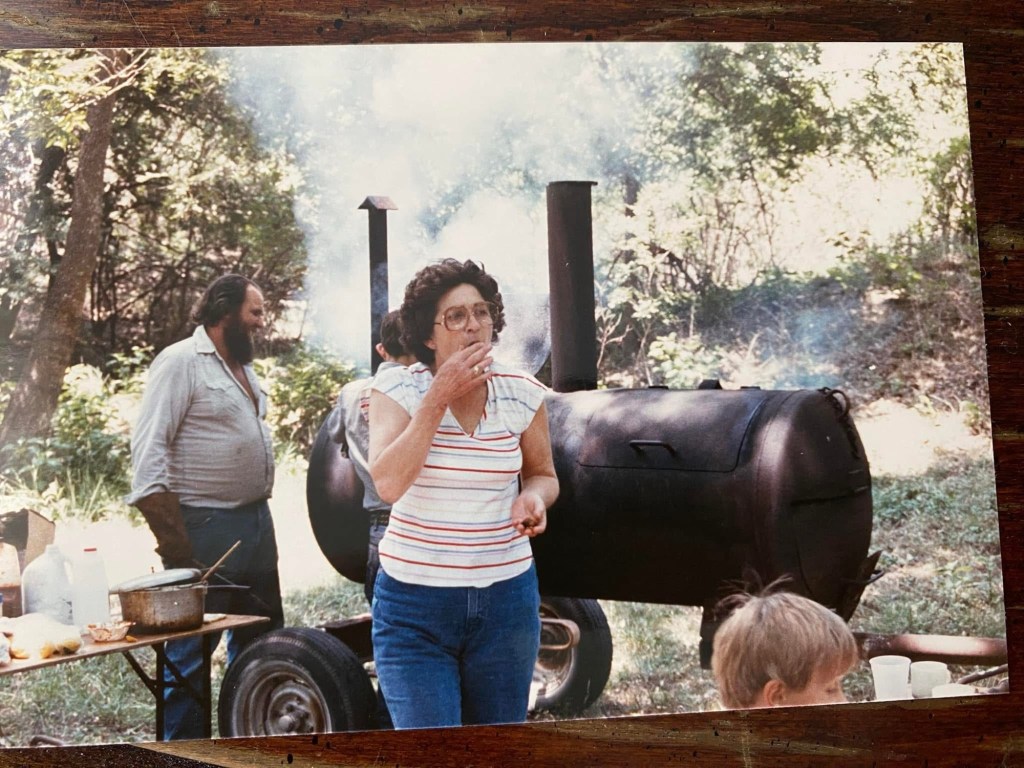
Brisket cooked for days. Fresh cornbread. Whatever else could be picked, prepared, and shared.
The Infamous Wimberley Pit
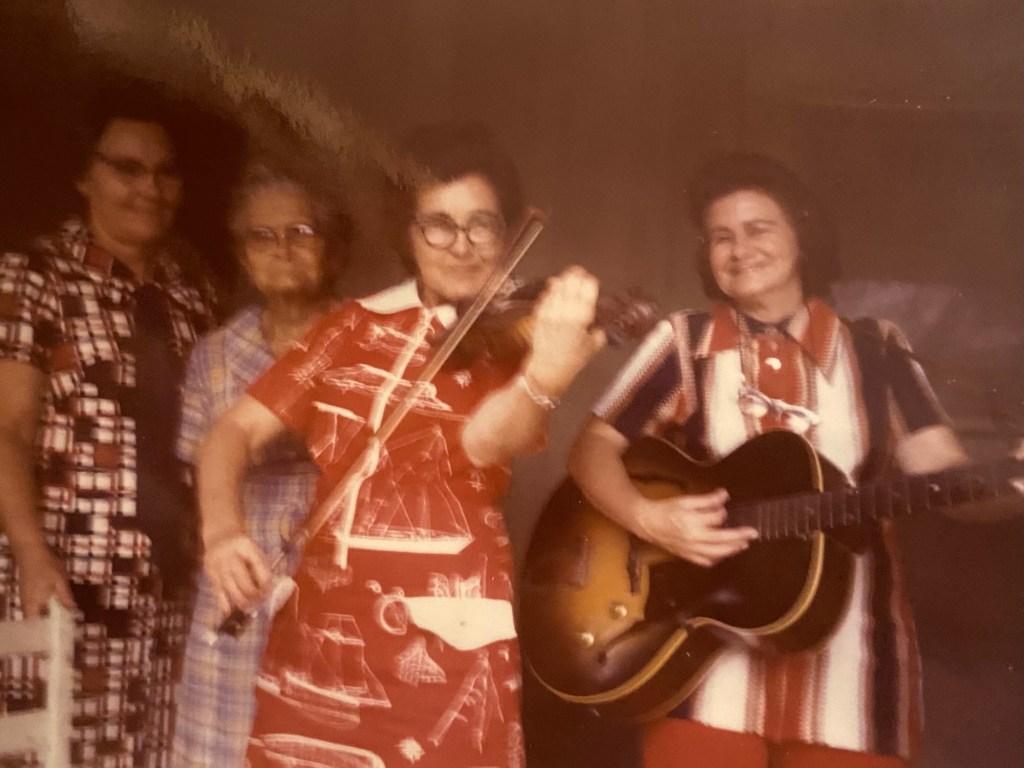
The grown-ups played fiddles and guitars while we kept rhythm with spoons clicking together, our dolls dancing in our hands. Music, food, and play braided themselves into one long afternoon that felt like it could stretch forever.
Post Food Music!
No one announced that something special was happening. But it was.
Grandma Nola’s Kitchen
Grandma Nola’s kitchen was a completely different world—and just as formative.
She was the “grown-up” grandma. Her garden was structured. When we picked something, it was for a reason. Recipes mattered. Purpose mattered. Her kitchen smelled of hot chili peppers, slow-braised meats, seafood, and heat that built slowly and intentionally.
She loved a creamy clam sauce over linguini.
A perfectly prepared piece of salmon.
This is where I learned to build spicy, fresh salsas and smoking-hot chili—how heat could be layered, not reckless, and how restraint could be just as powerful as abundance.
When we weren’t cooking, we were reading or driving into the mountains just outside of Santa Fe, New Mexico. Her kitchen taught me that food, like thought, benefits from structure—and that intention is its own form of creativity.
Lessons from My Grandfather Mat
My Grandfather Mat cooked with deep intention.
From him, I learned about different cuts of meat. How to light a proper grill fire. Why patience mattered. His ossobuco was unmatched—not because it was flashy, but because it was respected. Time, temperature, and care were never rushed.
He taught me that food responds to attention. That waiting is an ingredient. That some things can’t be hurried into being good.
What I Was Really Learning
Looking back, I see that I was learning far more than technique.
I was learning that food is connection. That creativity doesn’t require excess—just attention. That nourishment isn’t only about what’s on the table, but about what surrounds it.
One kitchen taught me how to listen—to the land, to the ingredients, to a moment. One taught me how to plan—to trust structure and purpose. One taught me how to wait—to honor fire, time, and intention.
What Remains
I still carry those kitchens with me.
They shape how I taste food, how I travel, and how I gather with people now. They remind me that meaning doesn’t need to be curated—but it does need presence. That the richest experiences are built slowly, with many hands, and with room for both mess and care.
Oh man… those were the days.
And in many ways, they still are.
This post is the first in my ongoing series, The Kitchens That Made Me, exploring how food, place, and memory shape the way we live and gather.
Food Guru Travel Guide existed before the Appalachian Trail ever entered my life.
The name came from the way I already moved through the world—thinking about food not just as something to eat, but as something to understand. I was always curious about where ingredients came from, how they were grown or produced, why certain flavors worked together, and how the layering of taste, texture, and timing could transform a simple meal into something memorable—into alchemy.
I am a thinker by nature. I love getting absorbed in ideas, turning them over slowly, and learning from the perspectives of others. For me, intellect lives in curiosity, not certainty—and food has always been one of the ways I explore the world.
When the Trail Reflected It Back
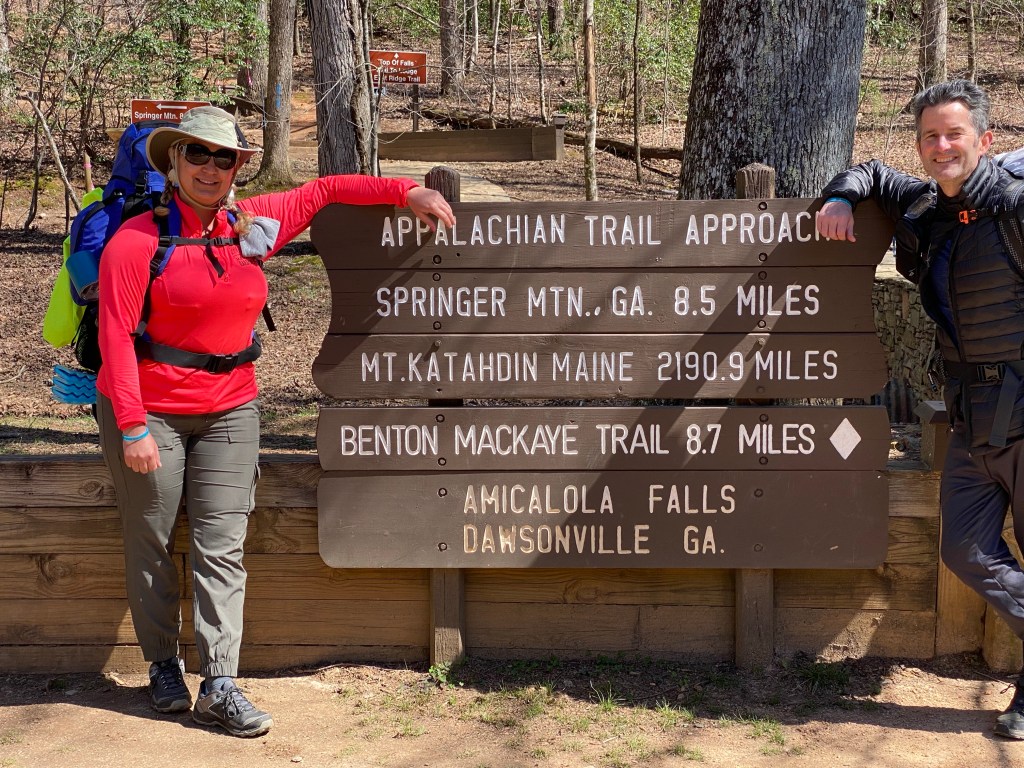
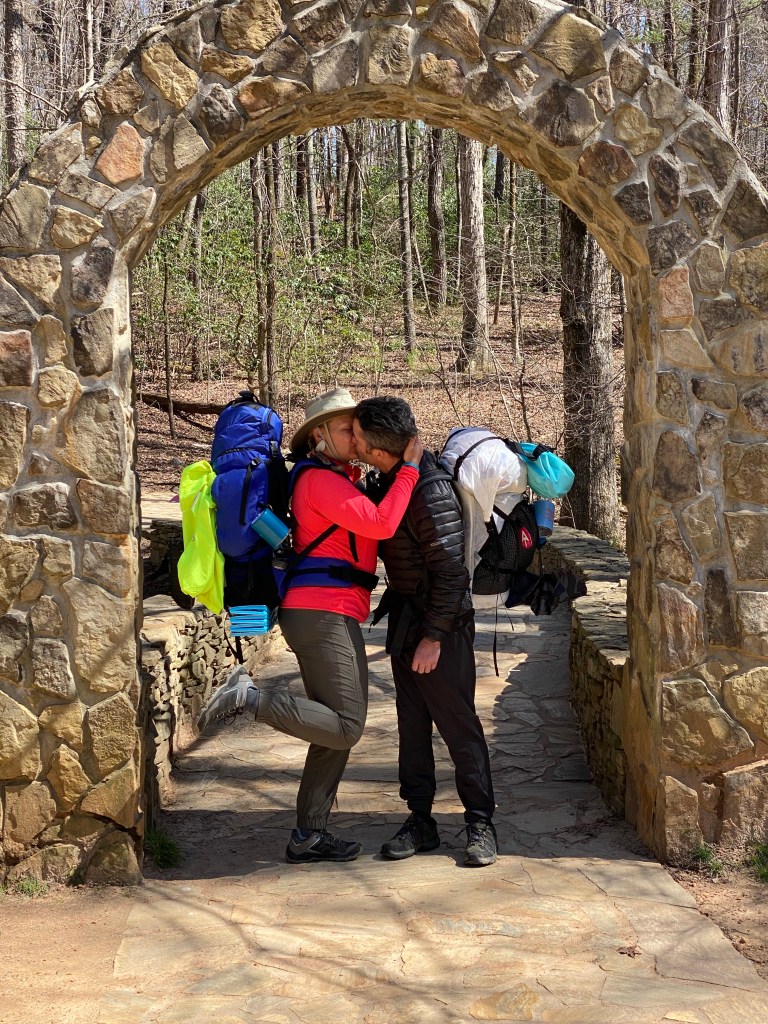
When I later found myself on the Appalachian Trail with my husband, that same relationship with food naturally followed me there.
Out on the trail, food becomes more than fuel. It’s morale. It’s comfort. It’s connection. I was the one thinking through meals, talking about flavors at camp, and helping turn whatever we had into something grounding after long days.
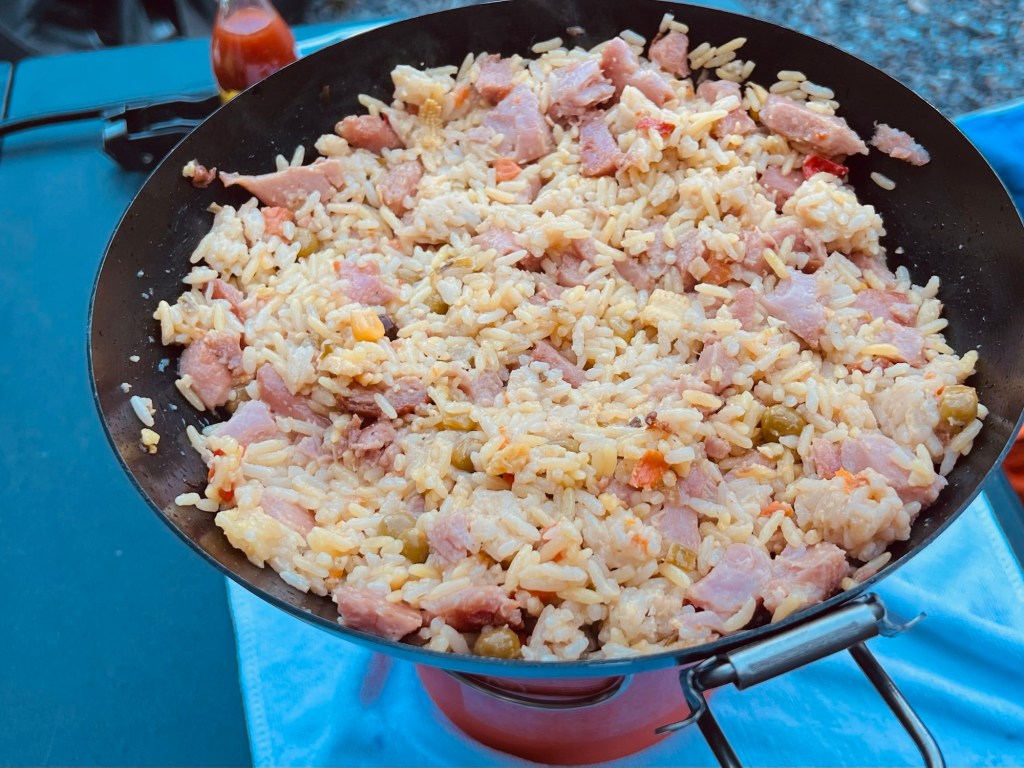
Trail Fried Rice. Appalachian Trail, 2022
Somewhere along the way, Food Guru became my trail name.
It was the trail name that chose me. It was something that reflected back who I already was.
Food as a Teacher
My food experiences run deep, as they do for most of us.
I think about why one dish stays with me while another fades. Why certain flavors spark emotion. Why memory attaches itself to a meal, a table, a place.
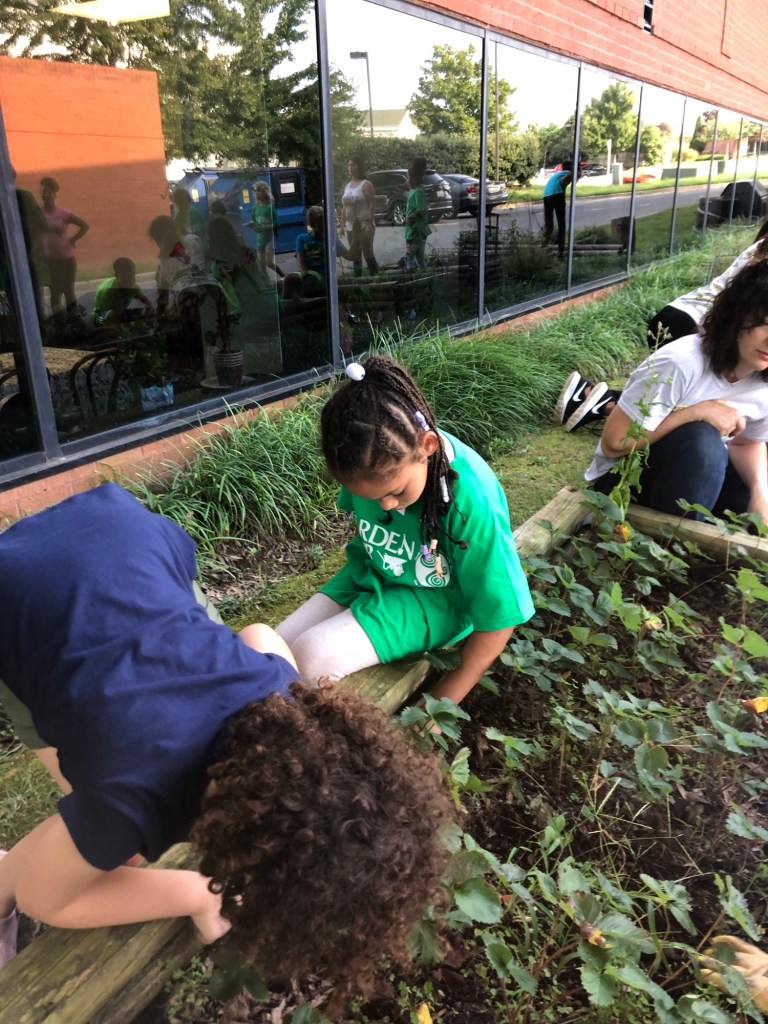
Garden Club. April 2015
Some of that curiosity was shaped early—by kitchens where ingredients came straight from the earth, where flavor was built patiently, and where food was treated as something to pay attention to.
Food teaches us how meaning is built—quietly, over time.
Complexity, Made Accessible
I love taking complexity and breaking it down—then recreating it as simply as possible.
I believe that:
complex flavors should be attainable
beauty doesn’t require exclusivity
meaningful experiences don’t need perfection
use what’s available
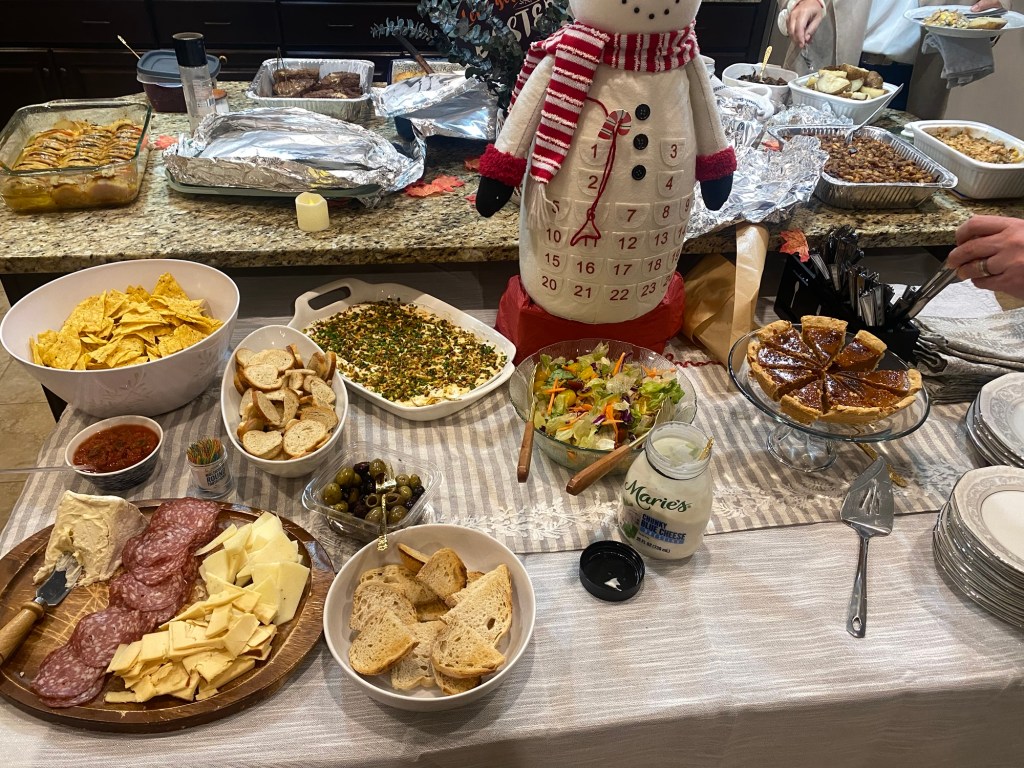
Use the good china—or don’t. Burn the fancy candles on a random Tuesday. Have your friends over even if you didn’t have time to tidy up.
Friendsgiving, 2025
Some of the best meals happen because someone says, “Come anyway.”
Travel Without the Gloss
The same philosophy carries into travel.
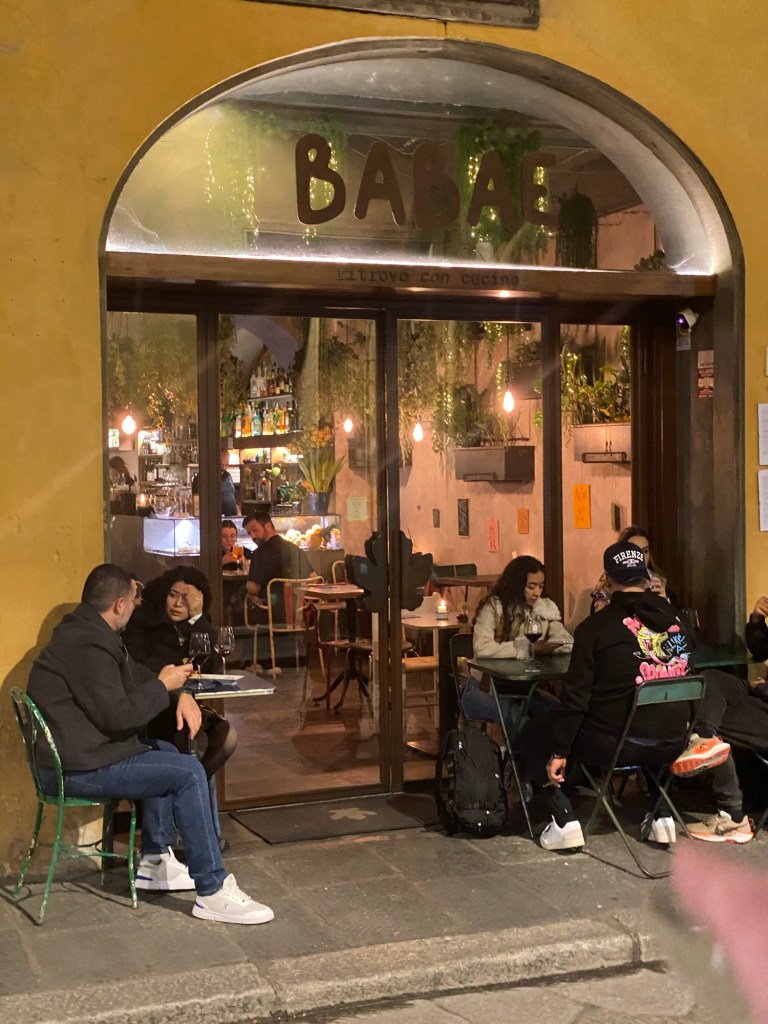
Try the place that doesn’t look fancy from the outside. Eat where the locals linger. Follow curiosity instead of plan.
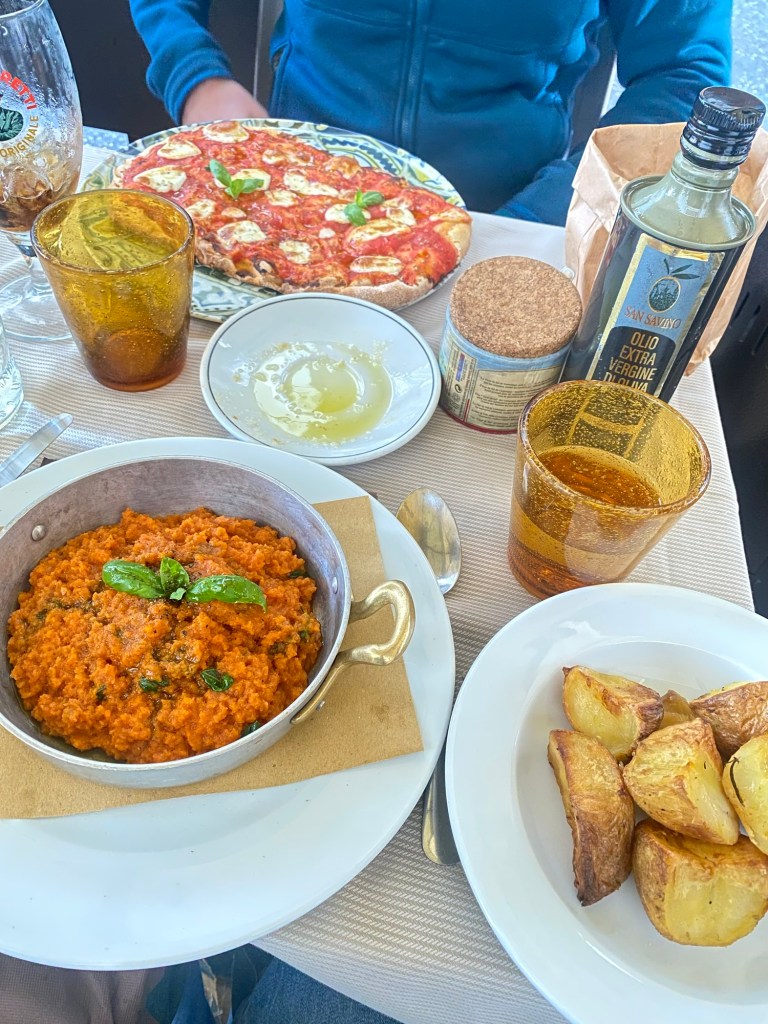
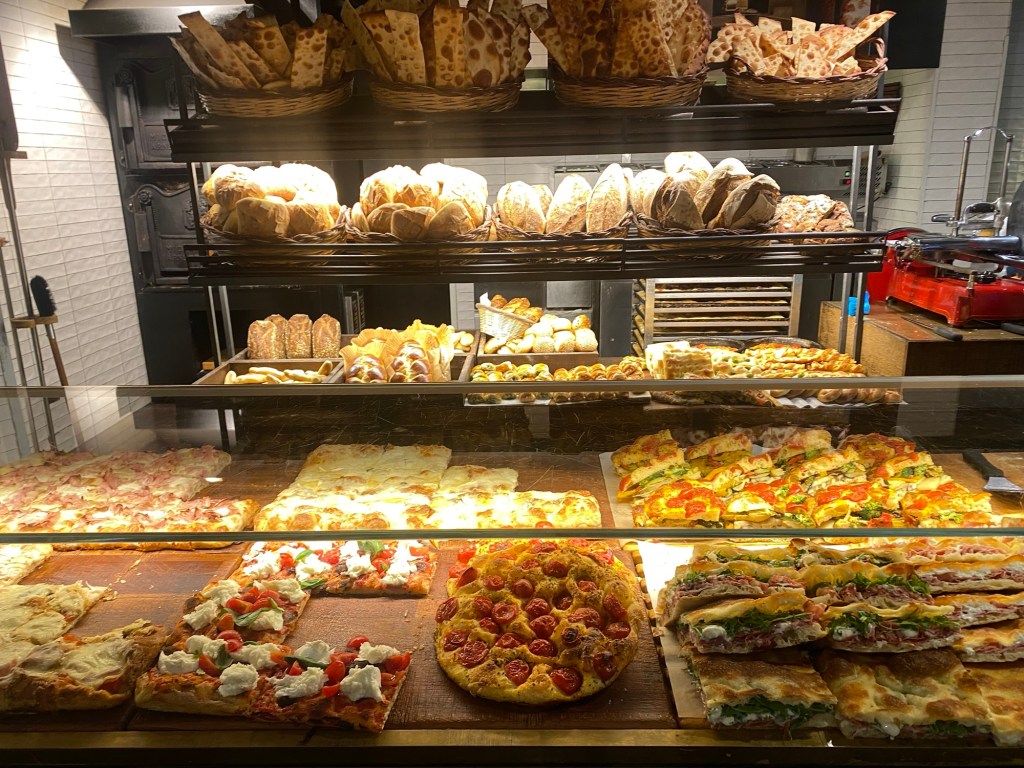
Wine Bar. Florence, Italy
The most memorable meals and moments often come from the places you almost walked past—the ones without curated perfection, but full of life once you step inside.
A Guide, Not an Authority
Food Guru Travel Guide isn’t about telling anyone how to eat or where to go.
It’s about encouraging exploration—of food, of place, and of ourselves. It’s about trusting that richness doesn’t require ceremony, and that joy doesn’t need permission.
Travel teaches us how to move through unfamiliar places. Food teaches us how to slow down and savor them.
And somewhere between hunger and arrival, we learn what matters.
Food and travel have always been my way of understanding the world. They pull me into the present moment. They ask me to notice flavors, textures, people, stories. They remind me that the best experiences are rarely the most efficient ones, and that discomfort often precedes discovery.
Lately, I’ve been thinking about how this applies not just to how we eat or where we go, but to how we evolve.
Random Roadside Lunch in Milan, Italy. Nov 2025
We are living at a moment in human history where our tools have begun to mirror our minds.
Artificial intelligence can now model reality, detect patterns we miss, and help us navigate complexity at a scale no individual human ever could. It can map possibilities, forecast outcomes, and reflect our own thinking back to us with unsettling clarity.
In this sense, AI may help humanity navigate reality showing us where we are, where we might go, and what paths we are statistically likely to take.
But navigation is not the same as meaning.
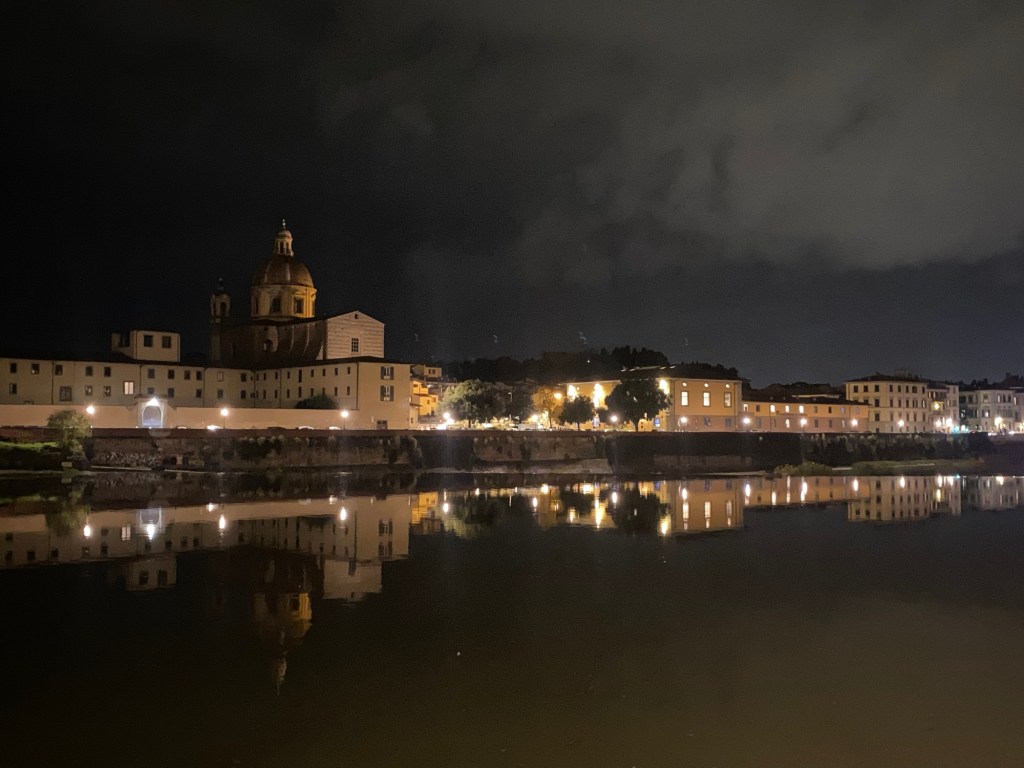
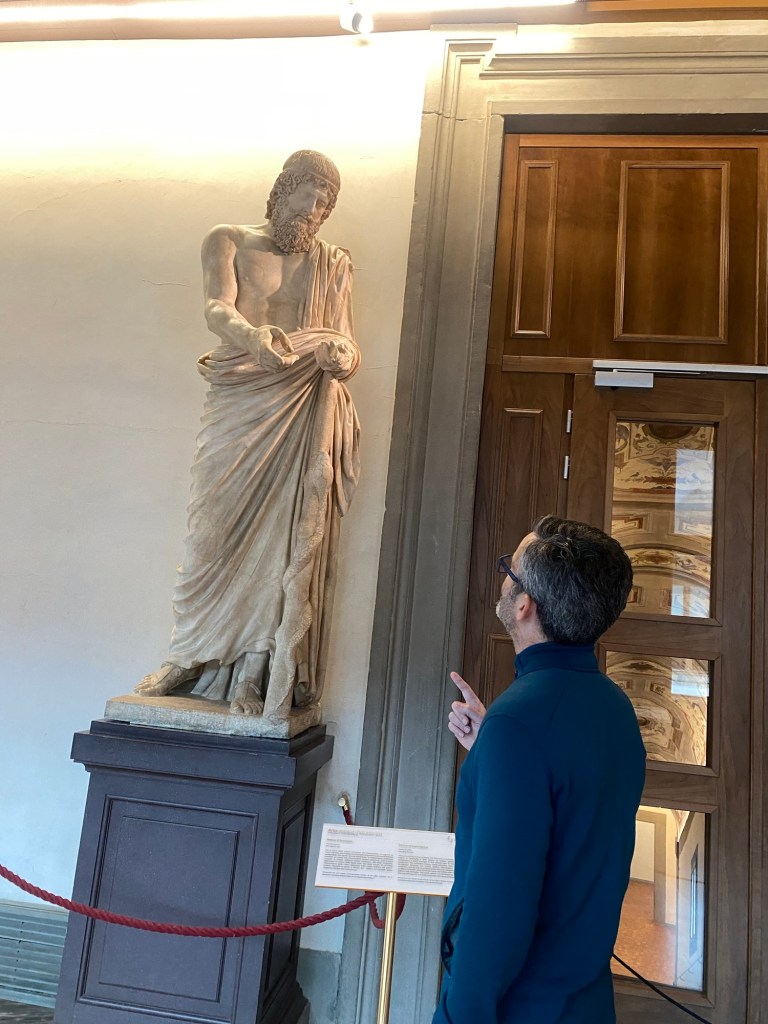
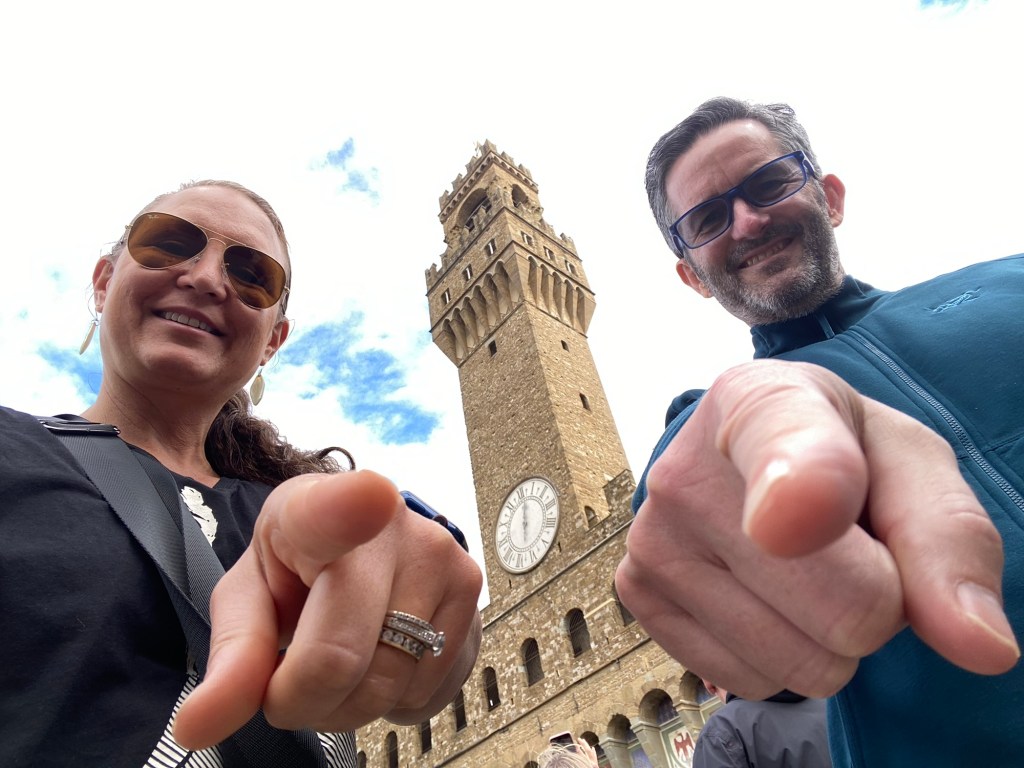
Uffizi Museum in Florence, Italy. Nov 2025
Meaning has always come from a different source: lived experience. And more specifically, from suffering.
Suffering is one of the most universal and defining aspects of being human. We experience pain not only in our bodies, but in memory, identity, anticipation, and loss. We grieve what we love, fear what we might lose, and ache for what we cannot yet reach.
These experiences are not glitches in our system. They are what teach us how to value the moments when pain recedes and when life feels stable, joyful, or whole.
Without suffering, joy would be weightless.
Without contrast, meaning would flatten.
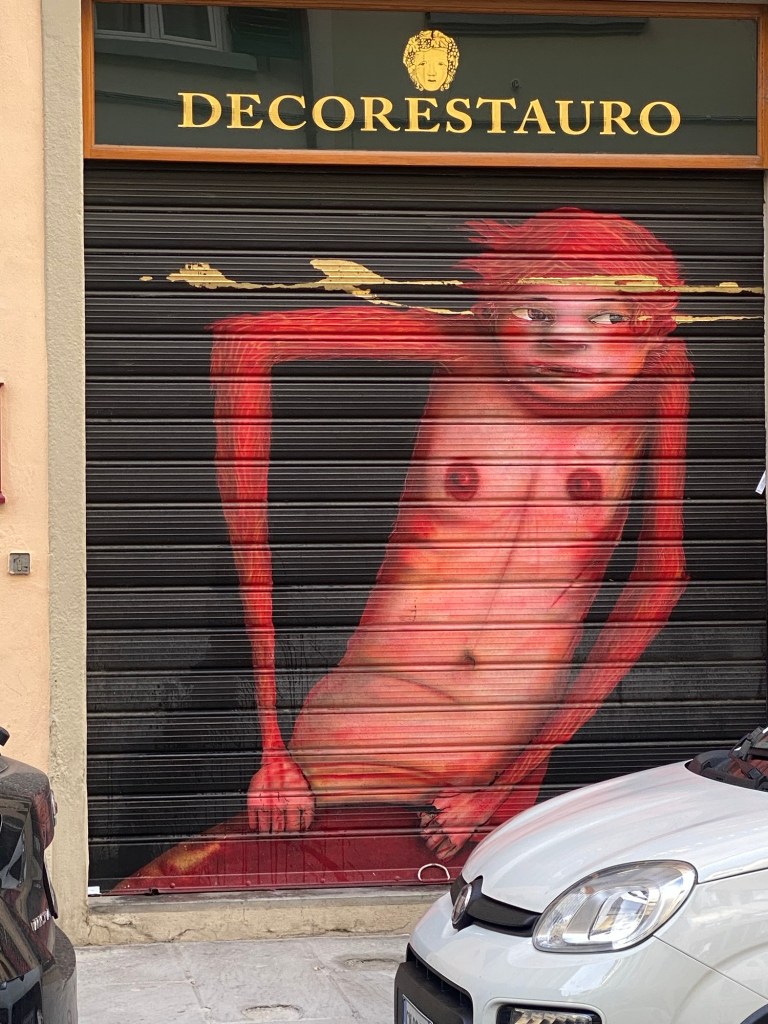
Street Art. Florence, Italy. Nov 2025
This is why suffering, while never something to seek or glorify, is profoundly formative.
It sharpens empathy. It deepens gratitude. It turns survival into wisdom.
When we move through pain with awareness, we often emerge more grounded, more compassionate, and more capable of recognizing what truly matters. Much like travel itself, the moments that challenge us tend to be the ones we carry longest.
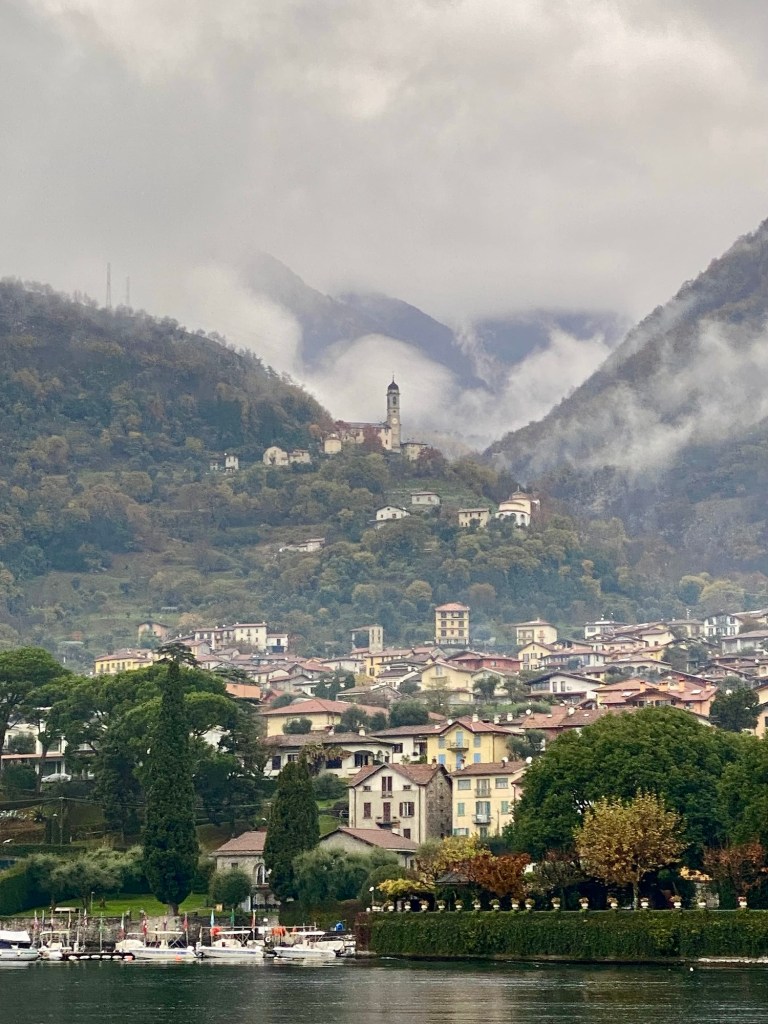
Rainy, cold day on Lake Como, Italy. Nov 2025
This is where the balance becomes essential.
AI may help humanity navigate reality. Suffering teaches humanity how to value it. Growth requires both.
If we rely only on tools, we risk becoming efficient but hollow, able to optimize outcomes without understanding why they matter.
If we rely only on suffering, we risk chaos, despair, or needless harm without direction or relief.
Growth happens when navigation is guided by value, and when value is supported not erased by our tools.
Cafe in Milan, Italy. Nov 2025
We already see this tension in how we travel and eat.
We carry maps in our hands that can tell us exactly where to go, but the meals we remember most, the places that change us, and the moments that stay with us rarely follow the fastest route. They come from detours, mistakes, shared tables, and experiences that can’t be optimized.
AI can help us move through the world more intelligently. Suffering teaches us why we should care where we’re going.
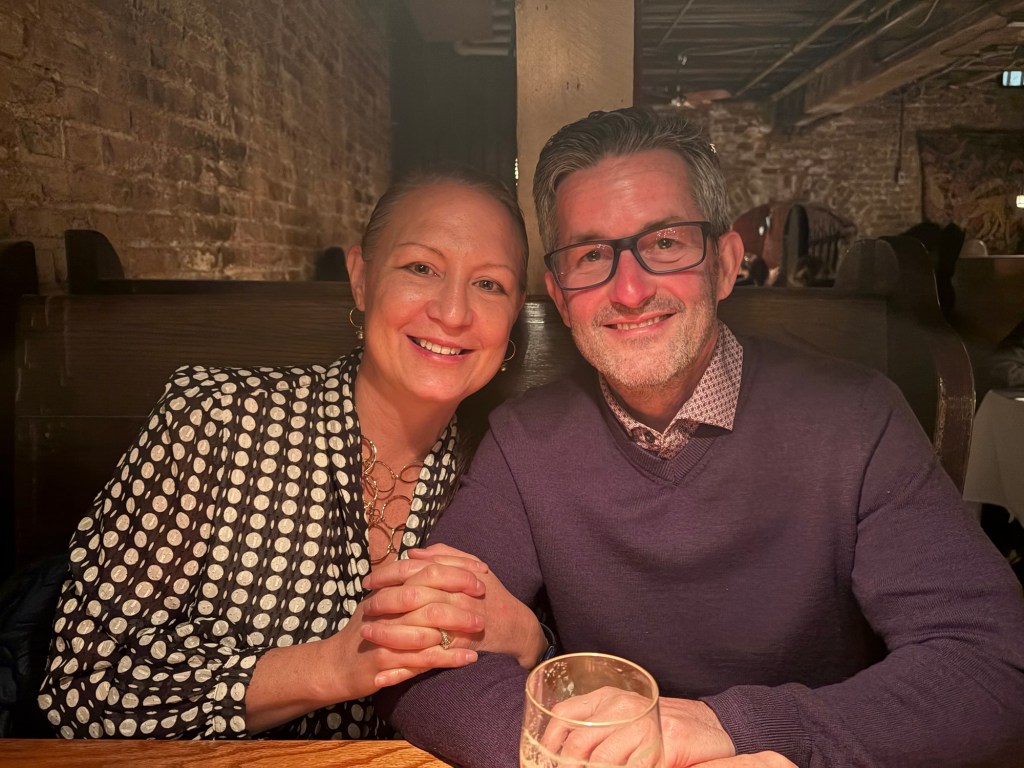
Me and hubby at Sforza in Milan, Italy. Nov 2025
The real challenge of our time is not whether AI will become more intelligent. It already is, in narrow and accelerating ways.
The deeper question is whether we humans can mature alongside it by resisting the urge to eliminate all discomfort, while still working to reduce unnecessary suffering.
Suffering teaches us how to care. AI can help us decide how to act on that care.
If we can hold both without ego, without fear, without losing our humanity, then the next human evolution will not be faster minds or cleaner systems or perfect control.
It will be our ability to hold intelligence and tenderness in the same hand, to see clearly and feel deeply. To navigate reality without losing our reason for living in it.
And perhaps that understanding begins the same way it always has: by slowing down, paying attention, and remembering what truly nourishes us.
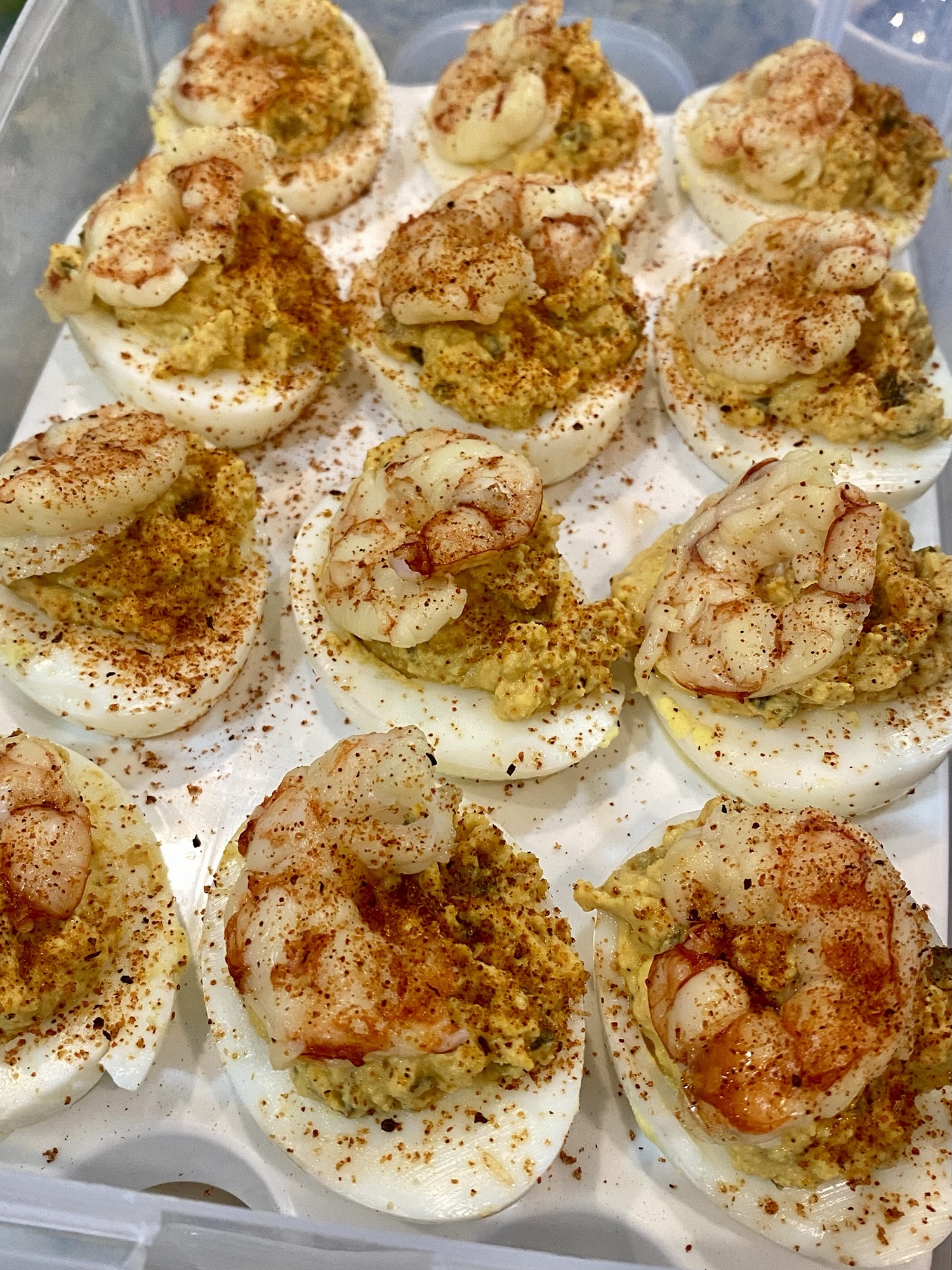
A bold, briny, unapologetically Chesapeake-style appetizer
Chesapeake Spicy Deviled Eggs
I make these every year for holiday parties and they are always the first thing to disappear! These deviled eggs are not subtle—and they’re not meant to be. Creamy yolks, heat from sriracha and curry, tangy fermented pickles, and a spicy pickled shrimp on top make this a show-stopping bite for holidays, cookouts, or cocktail parties.
⸻
Ingredients
Deviled Eggs
• 12 eggs, hard-boiled (tip: use eggs that are at least 3 days old—they peel better)
• 1 green onion, finely chopped
• whites for the filling
• greens for garnish
• 4 martini olives marinated in vermouth, finely chopped (optional but excellent)
• ¼ cup Bubbie’s Spicy Dill Pickles, finely chopped
• 1 Tbsp chopped peppers from the pickle jar
• ½ cup Hellmann’s mayonnaise (do not substitute—this matters)
• ¼ cup sriracha (use the real thing)
• 1 Tbsp curry powder
• 1 Tbsp garlic powder
• 1 Tbsp chili powder
• 1 tsp sea salt
• ½ tsp cracked black pepper
• 1 tsp olive brine
• Old Bay seasoning, for dusting
Optional Add-In
• Lump crabmeat, gently folded into the yolk mixture
⸻
Recipe video
Instructions
1. Prepare the eggs
Carefully peel the hard-boiled eggs. Slice each egg in half lengthwise. Remove the yolks and place them in a mixing bowl; arrange the whites on a serving tray.
2. Build the filling
Break up the yolks with a fork until smooth and free of large lumps. Add all dry spices (curry powder, garlic powder, chili powder, salt, and pepper) and mix thoroughly.
3. Add texture and heat
Stir in the white parts of the green onion, chopped olives (if using), chopped pickles, and pickle peppers.
4. Finish the mixture
Add the mayonnaise and sriracha. Mix until smooth and creamy.
• If the mixture feels too thick, add a little more sriracha and a splash of olive brine—go slowly.
• You’re looking for a consistency similar to mashed potatoes: creamy, but firm enough to hold its shape.
5. Fill the eggs
Spoon or pipe the yolk mixture into the egg white halves.
6. Top and garnish
Place one half of a spicy pickled shrimp on top of each egg, pink side up. Lightly dust with Old Bay and finish with the chopped green onion tops.
Miles hiked, 3.2. We got a super late start, hitting the trail to the top of Springer Mountain in Georgia at approximately 5:30pm. It’s a 1-mile hike to get to the top to start!! Probably not the smartest move as it was about 30 degrees F and super windy, making the wind chill drop temps in to the 20’s. Needless to say it was super cold!!
The trail to the top was WAY more challenging than we expected. We made it to the top and headed back down to the first shelter to camp around 7pm. It was dark and freezing (literally).
Goodnight!
We woke up the next day (see day 2 below) and i could barely feel my fingers. My feet were numb and every time i sat up, i got dizzy and had to lay back down! I finally made it up to the shelter and tried to start breakfast, but i kept getting dizzy and passing out. Jake gave me a snickers and it was completely frozen. Awesome start to the day! We were able to boil some water and warm up enough to hit the trail!
Day 2:
Miles hiked: 9.8 (AT mile 12.3)
Shelter: none. Pitched tent next to Cooper Gap parking lot. Friggen exhausted!!
Breakfast: none
Lunch: tuna pouches and nuts
Dinner: we split a snickers bar, handful of nuts. Had to ration water.
Connectivity on trail continues to be an issue with spotty service at best
Standing up to pee is no joke. Although super freeing and convenient, you use different muscles than when squatting. I actually got a cramp in my abs!!
But for real, the feminine stand up to pee device, i will call it a “She-nis”, is amazing!
I slept like shit after Day 1, even though Jake says i was snoring like a banshee 🤷♀️
I’m completely exhausted, my legs are burnt out. My back is screaming at me and I’m completely dehydrated. We have 2.1 miles to nearest water source and down to two cups of water. 1/2 a snickers bar for dinner. But this is fun, right?! 🤷♀️
Oh well, another day in the books. On to Day 3…
Day 3
Miles hiked: 11.3 (AT mile 20.5)
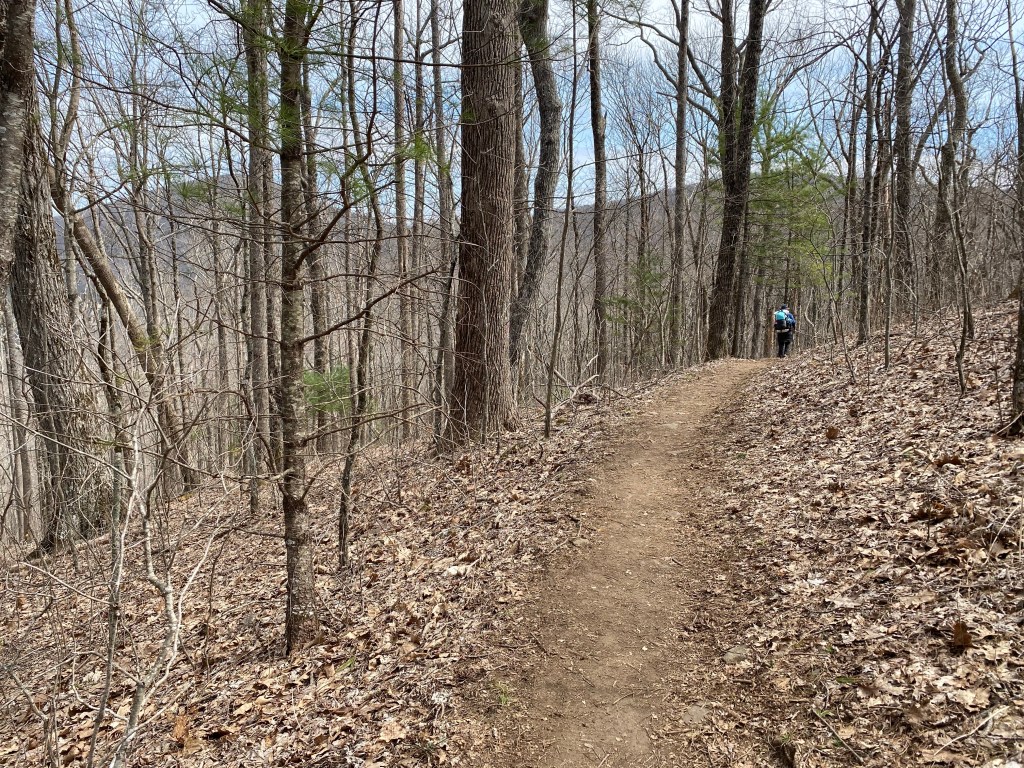
The start was really rough as we were dehydrated which i think is causing my leg muscles to cramp up and move so sluggishly. Our primary goal is a 2.1 mile hike to a water source, then on to a shelter for lunch and privy usage.
The hike was beautiful and the water was a flowing! We were so thankful for water but had to move on quickly because every time you stop, your muscles cool down quickly.
We stopped to make lunch at Gooch Gap shelter. Victoria and her fiancé and brother were there, it was nice to see them again! We had nice conversation and shared a meal together. We are all shooting for Neel’s Gap tomorrow. It’s gonna be a tough push for sure.
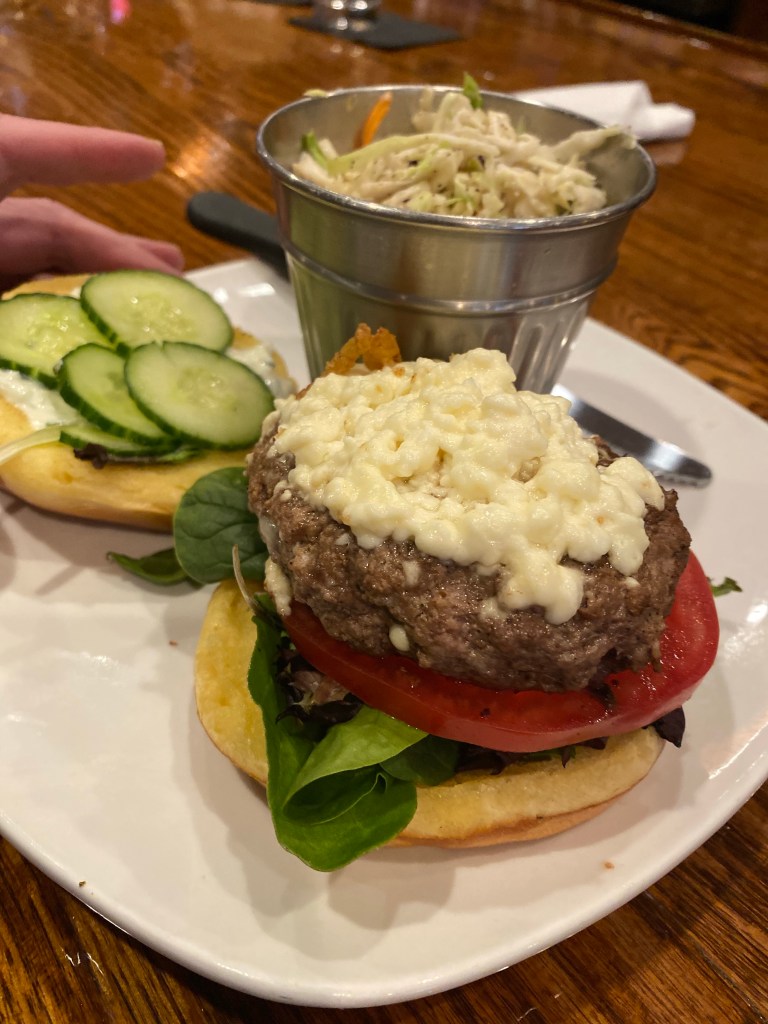
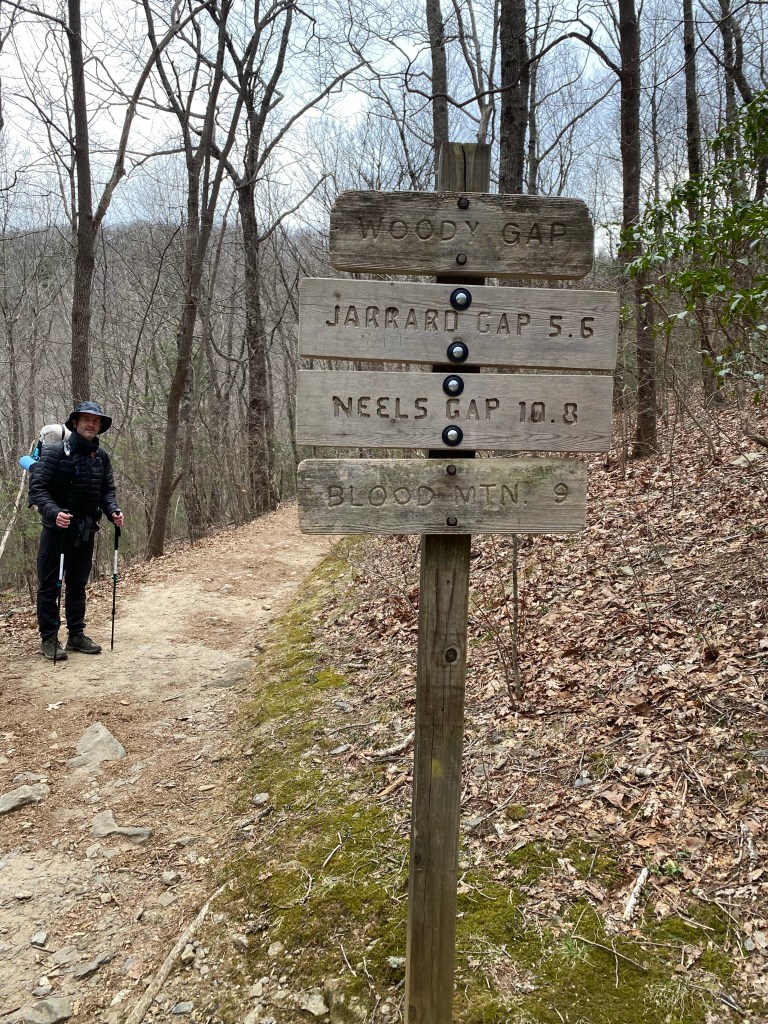
By the end of the day i was exhausted, so when we got to the parking lot for Woody Gap, i was adamant we find a ride in to town to get cleaned up and have a burger/beer. This was a need for me at this point, as i already felt broken. At this point i was thinking about calling a ride to get me to the car, so i would head back 3-days earlier than planned… that’s how terrible i felt.
After burgers, a few beers and a great nights sleep, i was ready to lace up and hit the trail in the morning!!
Yum 🤤
Day 4: on to Neel’s Gap!! (Mile 31.3)
Miles hiked: 14.3 (includes .3 mile hike to hostel)
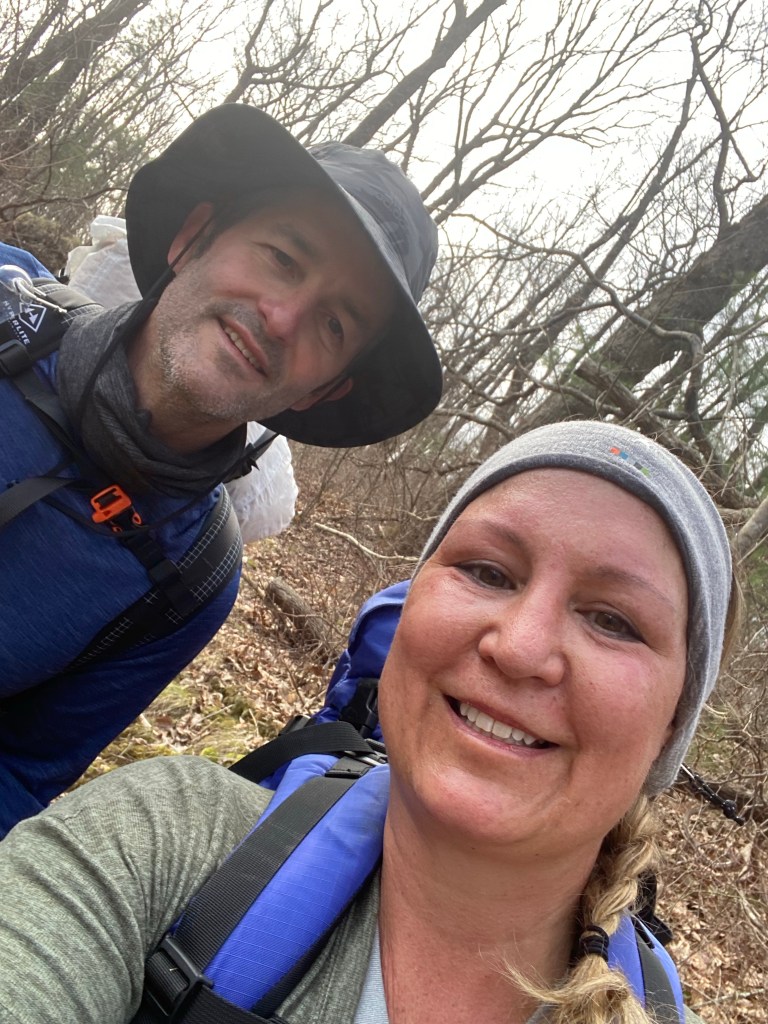
Holy crap! I feel SO. MUCH. STRONGER today!! Jake is just crushing the hiking but today, i am keeping up a little closer than i have been, i even took front point during our down hikes!
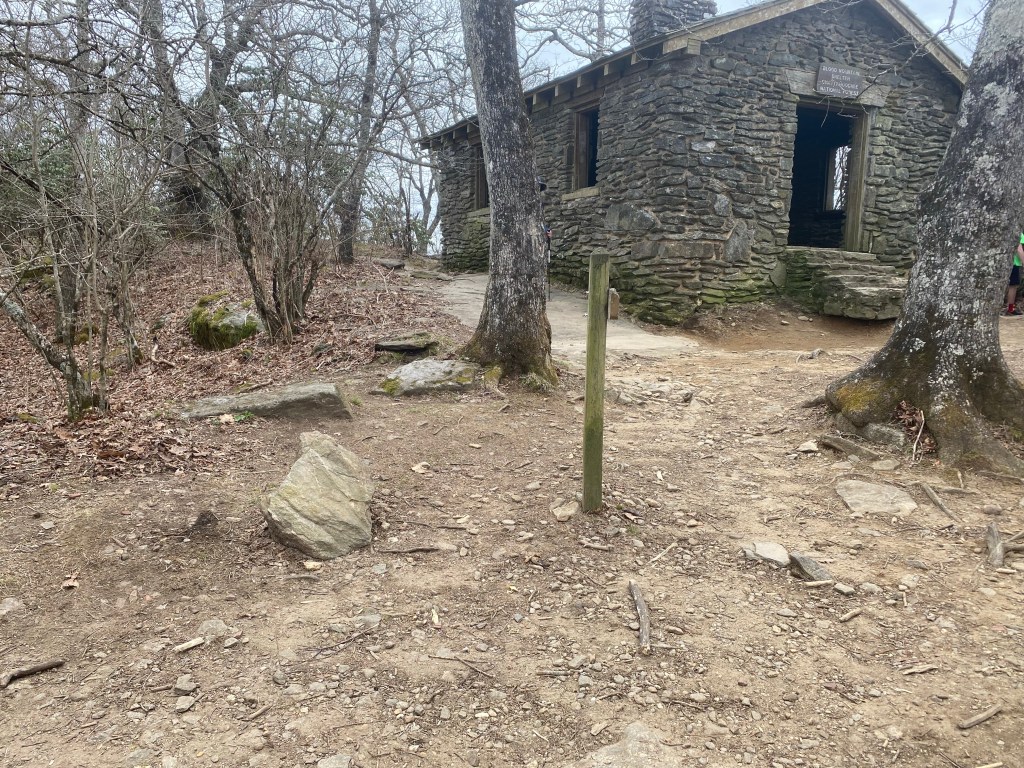
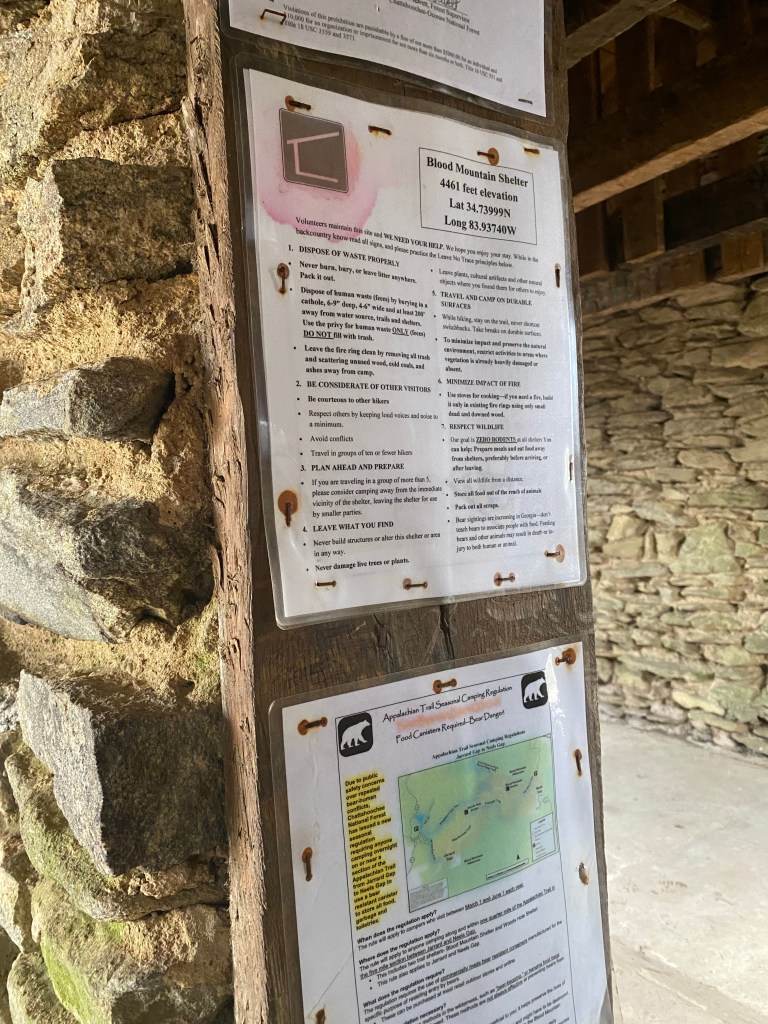
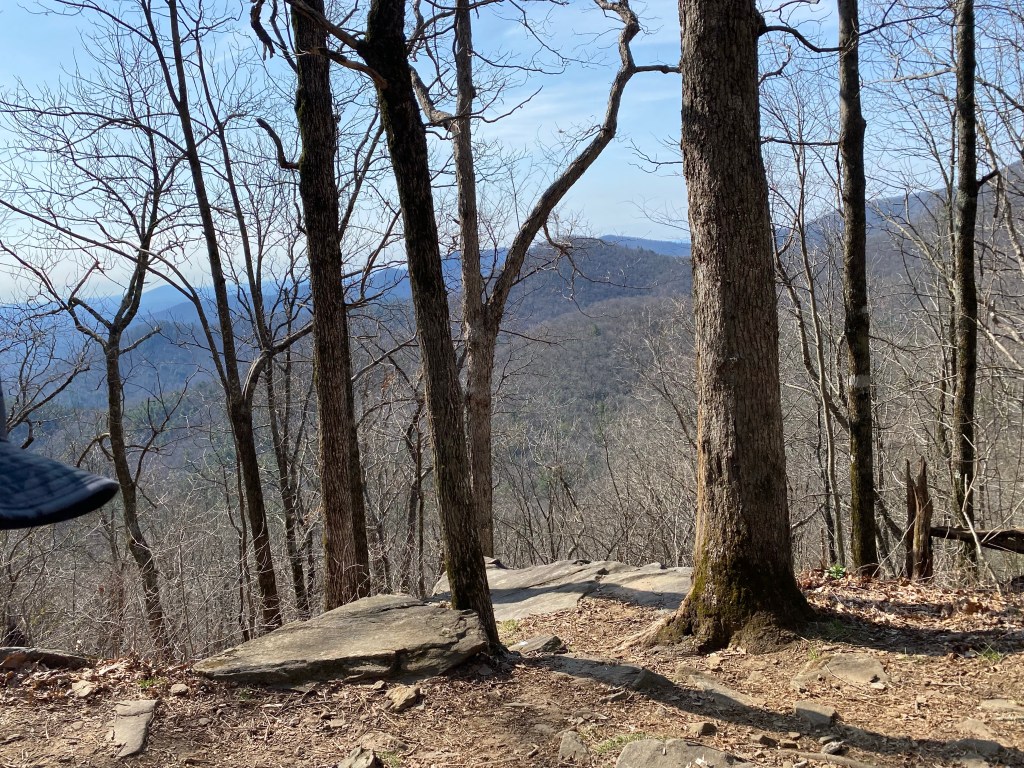
Blood Mountain was no joke! So incredibly difficult. Lots of bouldering up and mostly down.
The rocks really destroyed my feet so when i saw Neel’s Gap in the distanced, i got a surge of excitement and a little choked up. We had made it a little over 30 miles and to the point we’re about 20% of all thru hikers, hang up their boots and quit. I can totally see why. This shit is hard. Really pushes you on so many levels. Hiking is one thing, but backpacking is a whole other level.
The rocks really destroyed my feet so when i saw Neel’s Gap in the distanced, i got a surge of excitement and a little choked up. We had made it a little over 30 miles and to the point we’re about 20% of all thru hikers, hang up their boots and quit. I can totally see why. This shit is hard. Really pushes you on so many levels. Hiking is one thing, but backpacking is a whole other level.
The rocks really destroyed my feet so when i saw Neel’s Gap in the distanced, i got a surge of excitement and a little choked up. We had made it a little over 30 miles and to the point we’re about 20% of all thru hikers, hang up their boots and quit. I can totally see why. This shit is hard. Really pushes you on so many levels. Hiking is one thing, but backpacking is a whole other level.
Top of blood mountain in Georgia
We are staying a hostel tonight, Blood Mountain cottages and then back on trail tomorrow. Hike on!!
Day 5: Neel’s Gap to Low Gap, 11.5 miles (mile 42.8)
Breakfast: mountain house egg scramble
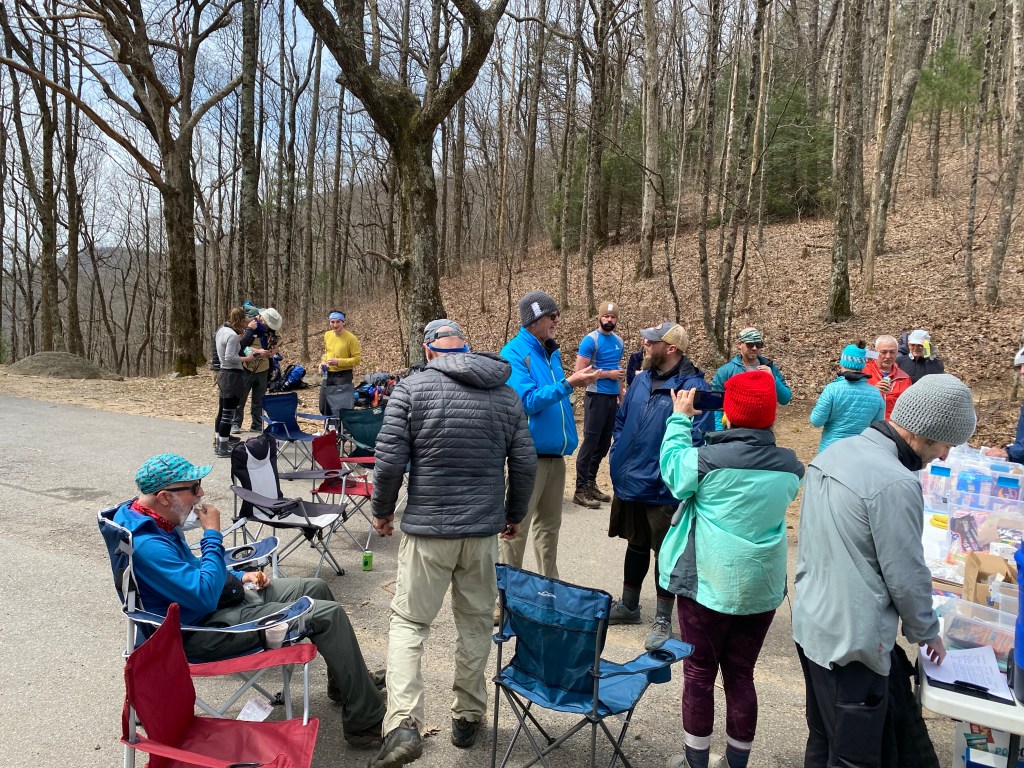
Lunch: Trail magic! Grilled cheese and ham!
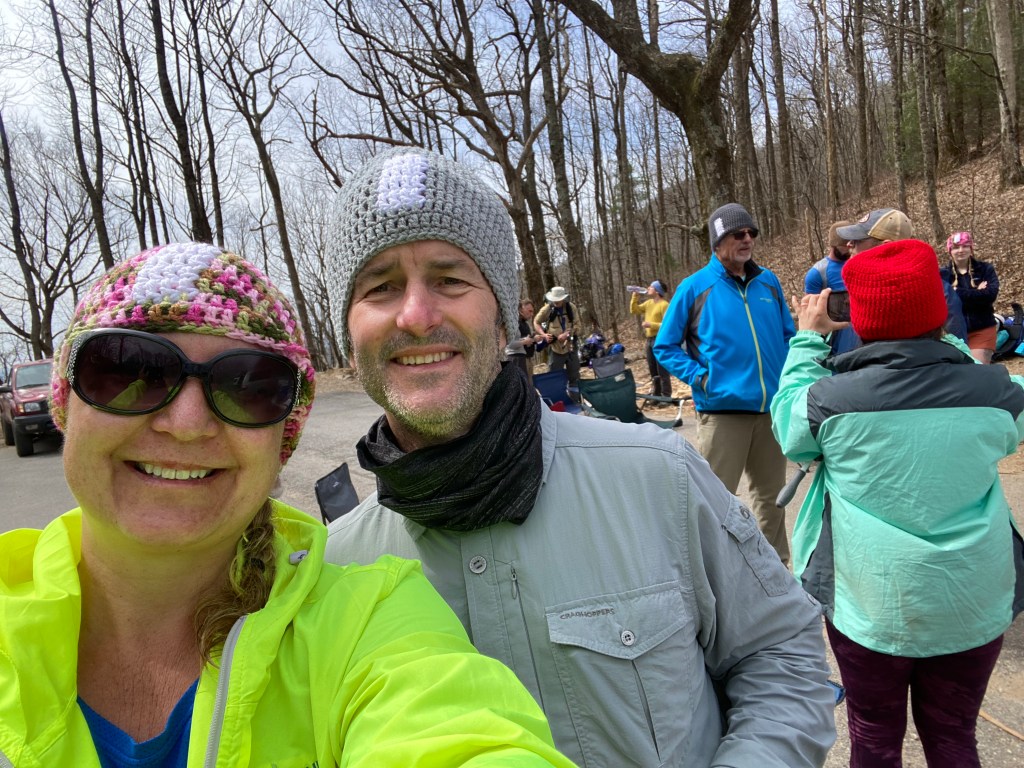
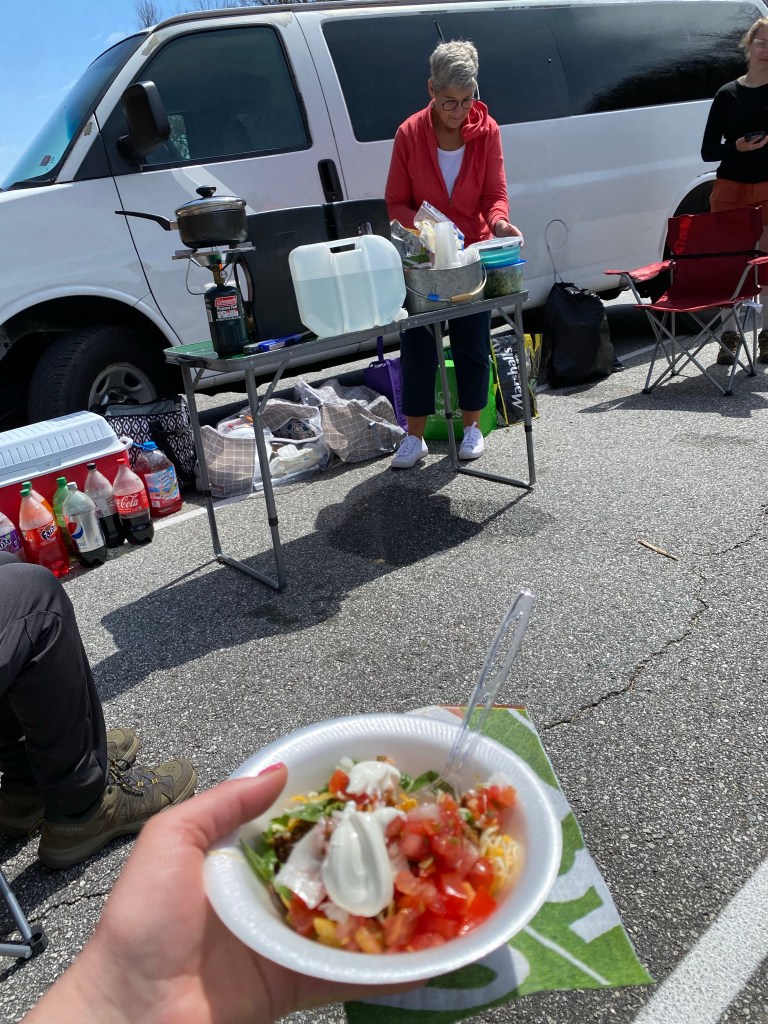
Second lunch: trail magic #2! Walking tacos by Queen Diva
Dinner: ramen and mountain house chicken Alfredo.
We still haven’t figured out how to perfectly hydrate mountain house 🤷♀️
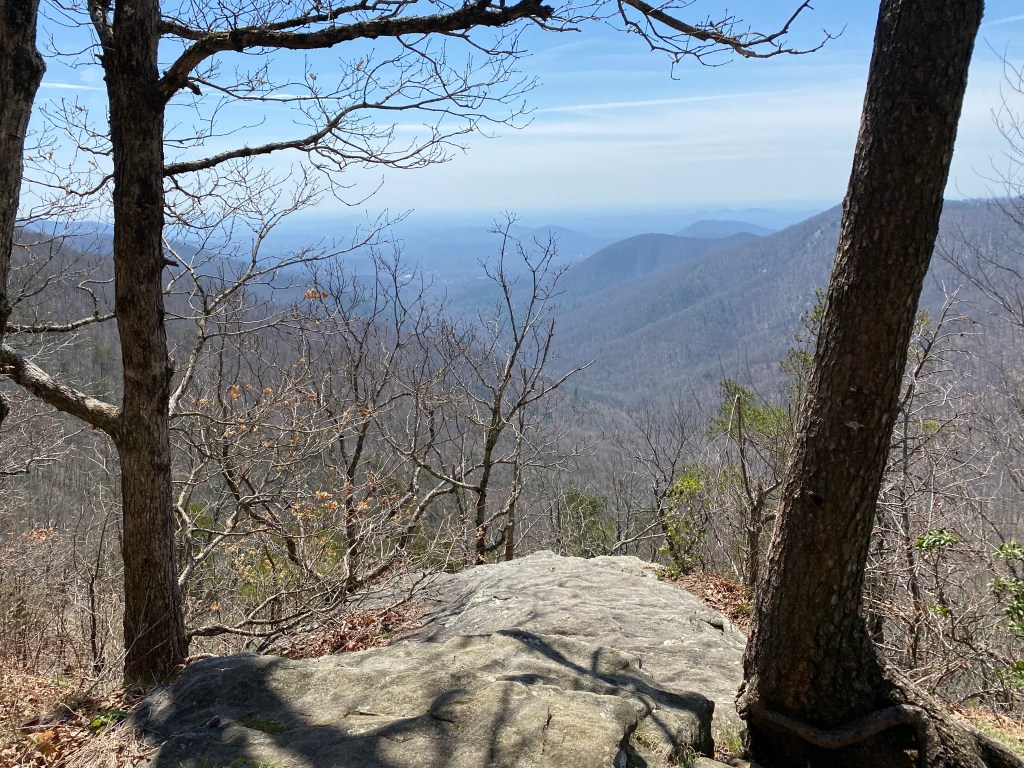
We met a hiker named AU (Mike) at Neel’s Gap just before we left. What an incredibly interesting fella! AU has been hiking this Georgia section of the AT for over 20 years! He was very encouraging for Jake and really had wonderful stories. Hiking with AU for most of the day was a Godsend, as it helped to take my mind off the pain of my hips. Jake seemed to really connect with him as well. We lost AU about 1/2!way in to our day, as we stopped to enjoy a magnificent view. Overnight camp at low gap.
When we arrived at Low Gap, AU already had his tent set up. He helped us to orient our tent to better prepare for the impending storm blowing in from the Southwest.
We made dinner and then hunkered down for the storm!! We both passed out fairly quickly and then around 2 am, the storm blew in. It was a crazy windy storm. Lots of rain. Our tent has very wet the next morning!
The wind was very crazy. It sounded like a tsunami rolling in. You could hear the wind blowing Thru the trees miles away and then it would hit the campsite. It was a very weird and cool beach sounding effect.
Day 6: Low Gap to Unicoi Gap, 9.7 miles (Mile 52.5)
Final trail day for Food Guru. Overnight at Around the Bend Hostel. Dinner with Queen Diva, Hopeful, and Circuit Rider in Hiawassee.
We were invited to dinner by Hopeful after running in to them again at Around the Bend. They had provided trail magic a couple of days ago. We went to an AYCE buffet that tasted amazing 🤩 To be clear, i am not usually a buffet person but after a week on trail, it was heaven! Lol! We had great conversation and exchanged numbers to keep in touch for trail progress.
It was my last evening on trail as i had to return home to ensure the youngest son graduates high school and i tweaked my hip stepping on a rock and just could seem to get it back in place🤷♀️
I will now transition to hiker support and logistics planner as my husband finishes his thru hike! We will see how that goes…















 The Food Guru: Food, Travel, Photography = Life