Before I understood food as flavor or craft, I understood it as place.
The kitchens that shaped me were not show kitchens. They were working kitchens—rooms where the outside came in on muddy shoes and sun-warmed hands. Both of my grandmothers were gardeners, and their kitchens reflected that. Counters were places of transition, where something pulled from the earth became something shared, something sacred.
I didn’t think of it as learning at the time.
I just liked being there.
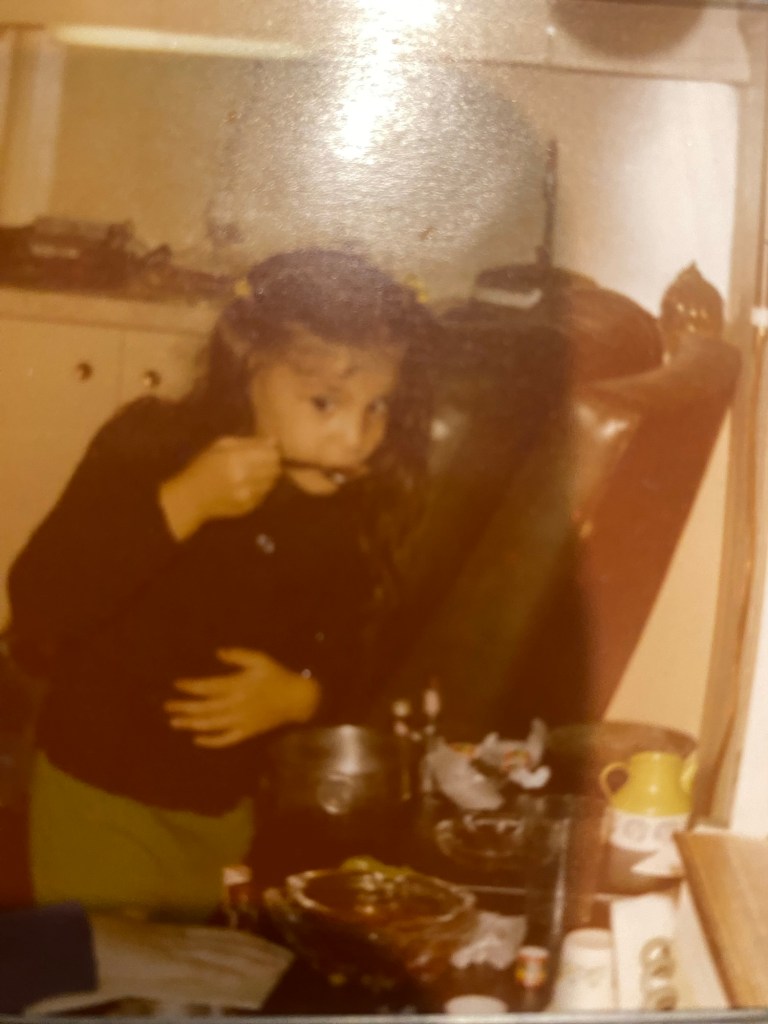
The Wimberley Family Farm
As a child, we would visit my Grandma Helen’s family farm, where her brother still lived. The land felt endless to me then. I remember my Grand-Uncle Grant taking us into the massive farm garden and showing us how to pick corn—how to feel for readiness, how to twist and pull without damaging the stalk.
He taught us about the silk worms too—how they lived tucked inside the corn, and how to remove them before cooking. It wasn’t hidden or softened. It was simply part of the process. Food wasn’t sterile, and it wasn’t meant to be. Growth included discomfort, and understanding that didn’t diminish the experience—it deepened our appreciation for it.
We would drag our haul back to his porch, arms full, the corn still warm from the sun. That’s where he showed us how to make dolls from the husks and corn silk. The silk became hair. The husks folded into dresses. Even then, everything had another use.
Food, Music, and Rhythm
Around all of this was the food.
Brisket cooked for days.
Fresh cornbread.
Whatever else could be picked, prepared, and shared.
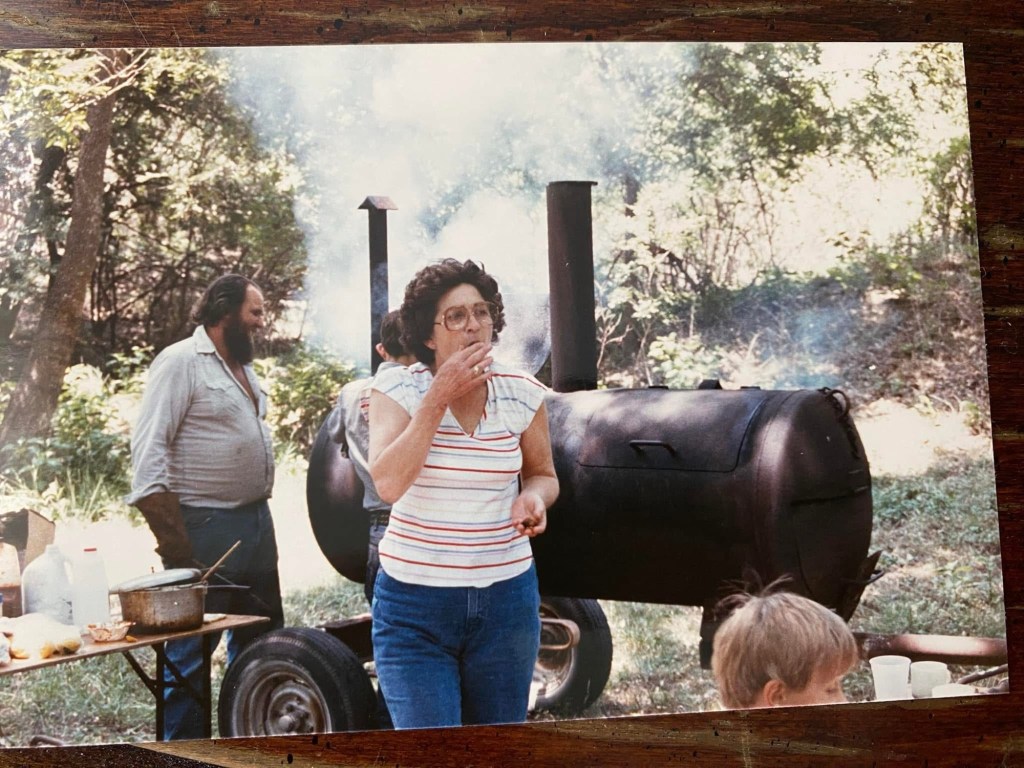
The grown-ups played fiddles and guitars while we kept rhythm with spoons clicking together, our dolls dancing in our hands. Music, food, and play braided themselves into one long afternoon that felt like it could stretch forever.
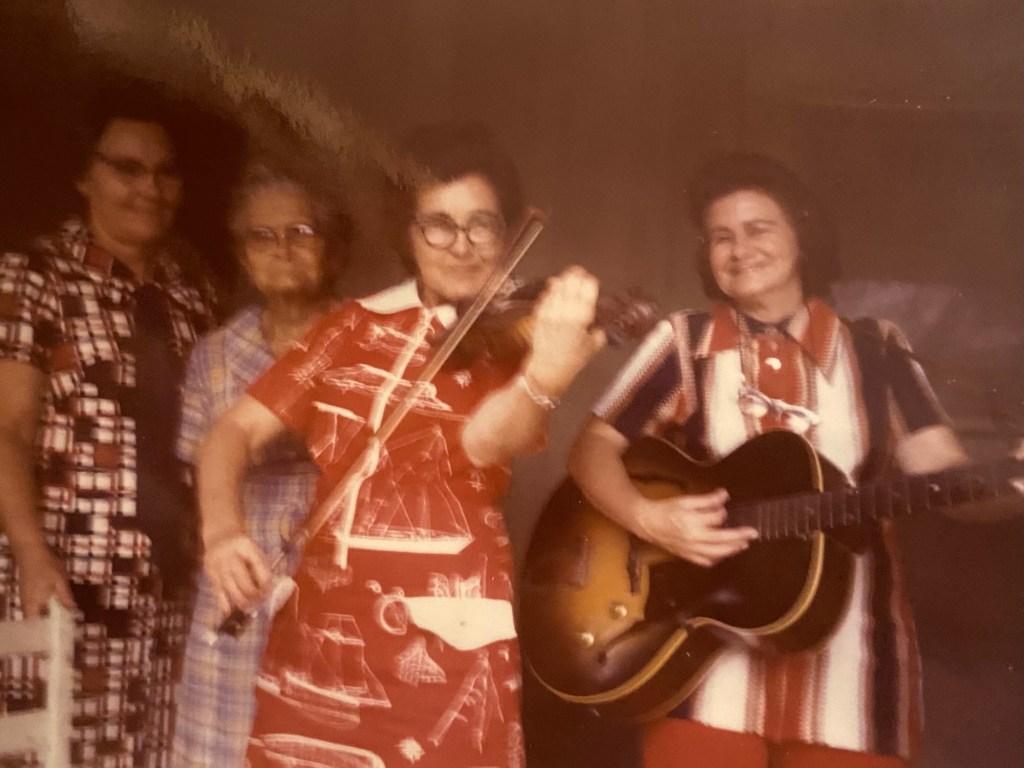
No one announced that something special was happening.
But it was.
Grandma Nola’s Kitchen
Grandma Nola’s kitchen was a completely different world—and just as formative.
She was the “grown-up” grandma. Her garden was structured. When we picked something, it was for a reason. Recipes mattered. Purpose mattered. Her kitchen smelled of hot chili peppers, slow-braised meats, seafood, and heat that built slowly and intentionally.
She loved a creamy clam sauce over linguini.
A perfectly prepared piece of salmon.
This is where I learned to build spicy, fresh salsas and smoking-hot chili—how heat could be layered, not reckless, and how restraint could be just as powerful as abundance.
When we weren’t cooking, we were reading or driving into the mountains just outside of Santa Fe, New Mexico. Her kitchen taught me that food, like thought, benefits from structure—and that intention is its own form of creativity.
Lessons from My Grandfather Mat
My Grandfather Mat cooked with deep intention.
From him, I learned about different cuts of meat. How to light a proper grill fire. Why patience mattered. His ossobuco was unmatched—not because it was flashy, but because it was respected. Time, temperature, and care were never rushed.
He taught me that food responds to attention.
That waiting is an ingredient.
That some things can’t be hurried into being good.
What I Was Really Learning
Looking back, I see that I was learning far more than technique.
I was learning that food is connection.
That creativity doesn’t require excess—just attention.
That nourishment isn’t only about what’s on the table, but about what surrounds it.
One kitchen taught me how to listen—to the land, to the ingredients, to a moment.
One taught me how to plan—to trust structure and purpose.
One taught me how to wait—to honor fire, time, and intention.
What Remains
I still carry those kitchens with me.
They shape how I taste food, how I travel, and how I gather with people now. They remind me that meaning doesn’t need to be curated—but it does need presence. That the richest experiences are built slowly, with many hands, and with room for both mess and care.
Oh man… those were the days.
And in many ways, they still are.
This post is the first in my ongoing series, The Kitchens That Made Me, exploring how food, place, and memory shape the way we live and gather.

 The Food Guru: Food, Travel, Photography = Life